
Custom Mold Manufacturing & Precision Tooling
Explore custom mold manufacturing for rubber, silicone, plastic and packaging applications. Share your drawing, material, quantity and part requirements so the tooling approach can be reviewed for your project.
Find the Right Mold Manufacturing Route
Choose the tooling family that matches your part material and molding process. Each page explains key design considerations and related projects.
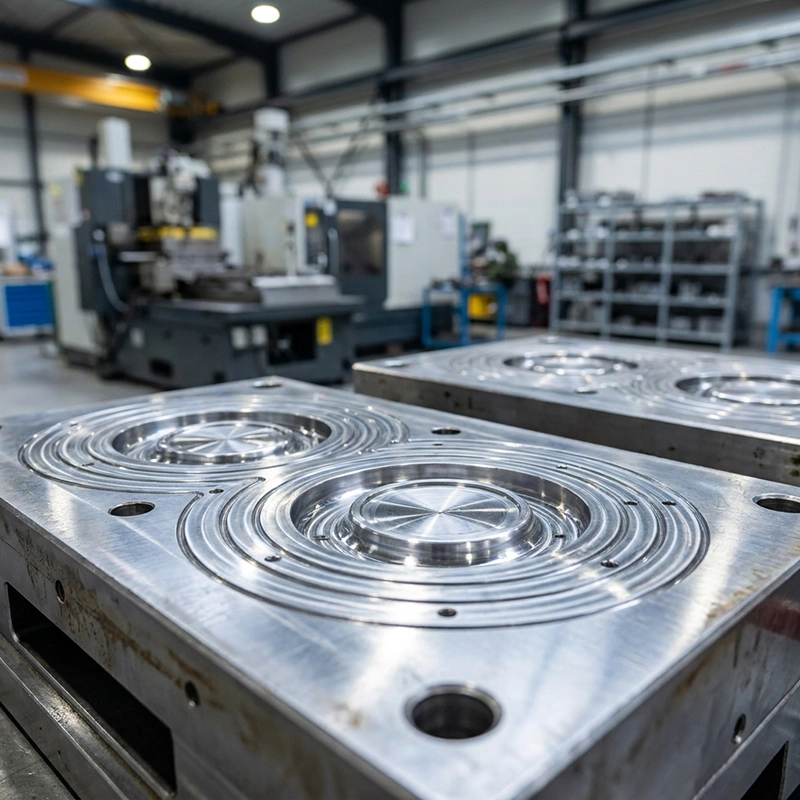
Rubber Mold Manufacturing
Compression, transfer and injection tooling for engineered rubber components.
Explore tooling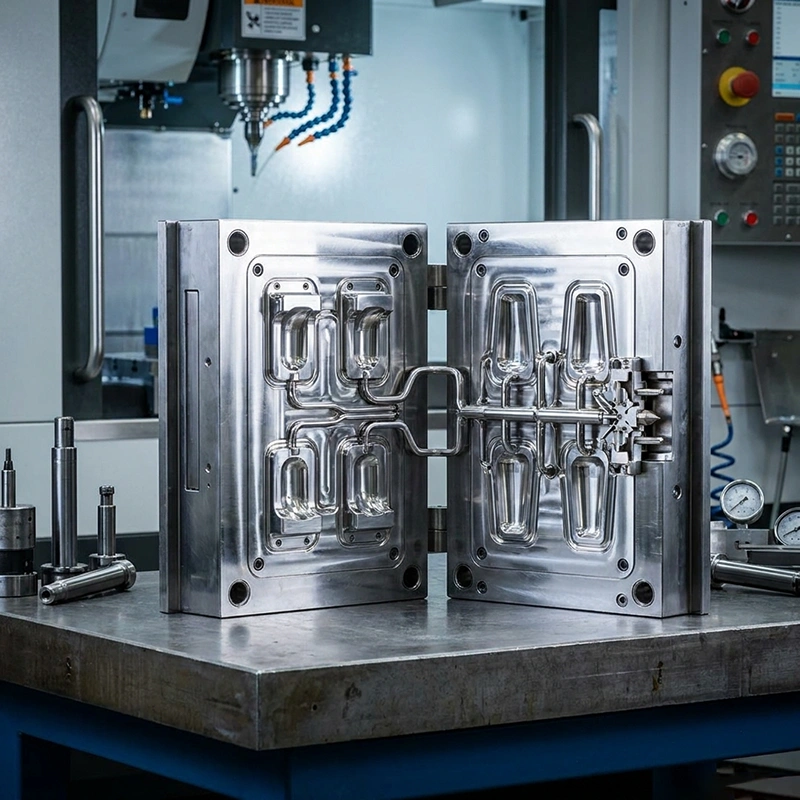
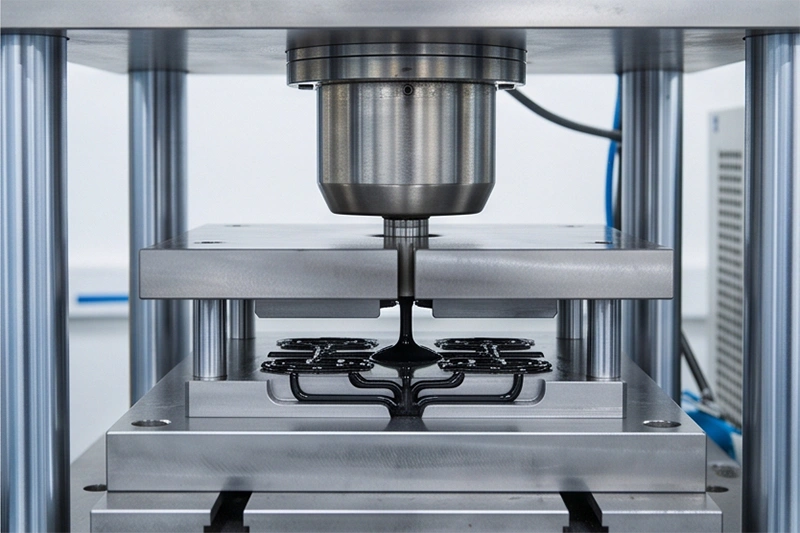
Silicone Mold Manufacturing
Tooling concepts for HCR compression and LSR injection molded silicone parts.
Explore tooling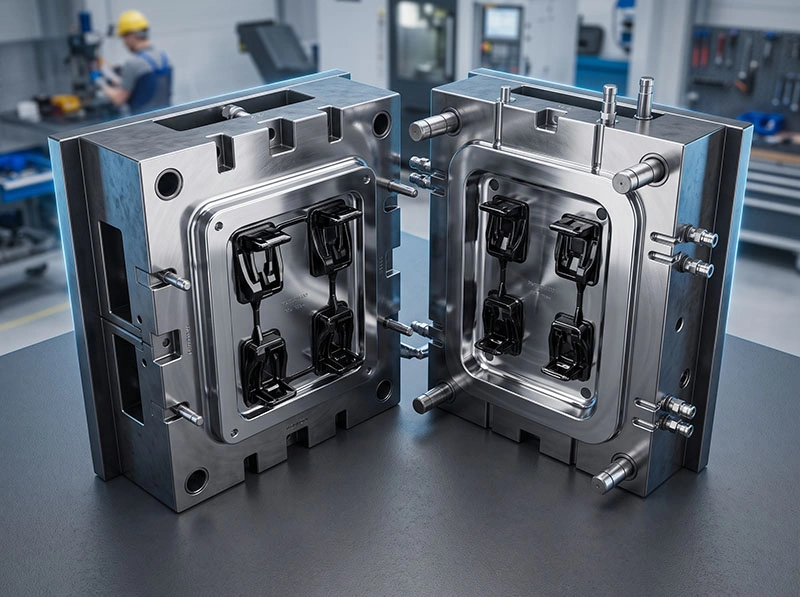
Plastic Injection Molds
Explore mold design considerations for custom thermoplastic components.
Explore tooling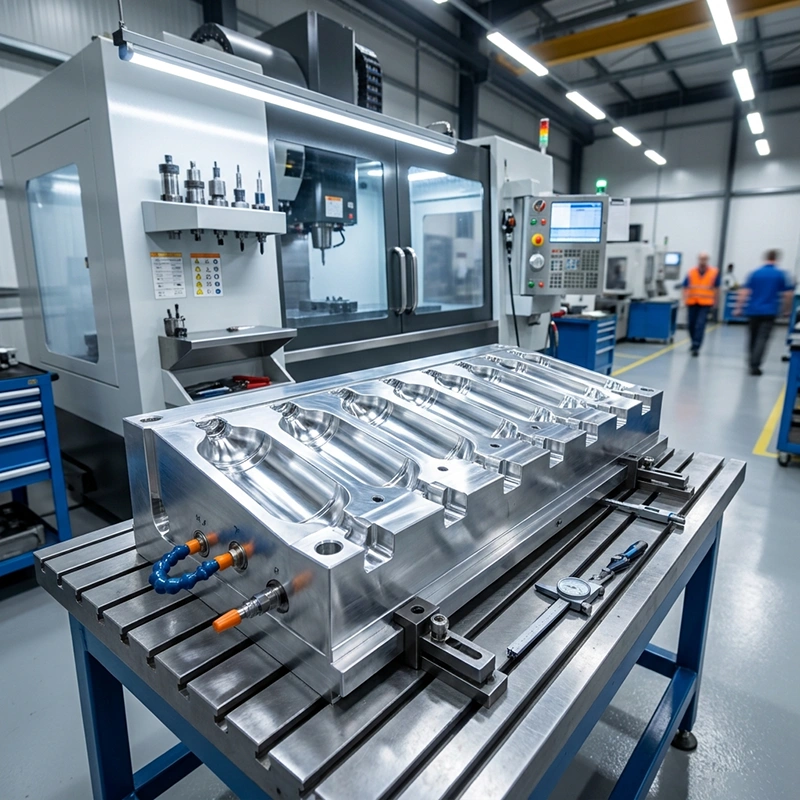
PET & PE Bottle Molds
Explore tooling approaches for PET and polyethylene packaging projects.
Explore toolingExplore Published Mold Projects
See selected tooling examples from the Temco portfolio. Project-specific dimensions and materials are assessed separately.
Industrial Tooling Capabilities
Mold design depends on the material, part geometry, volume and manufacturing method. Explore key tooling options and the factors that influence cavity layout, venting and part quality.
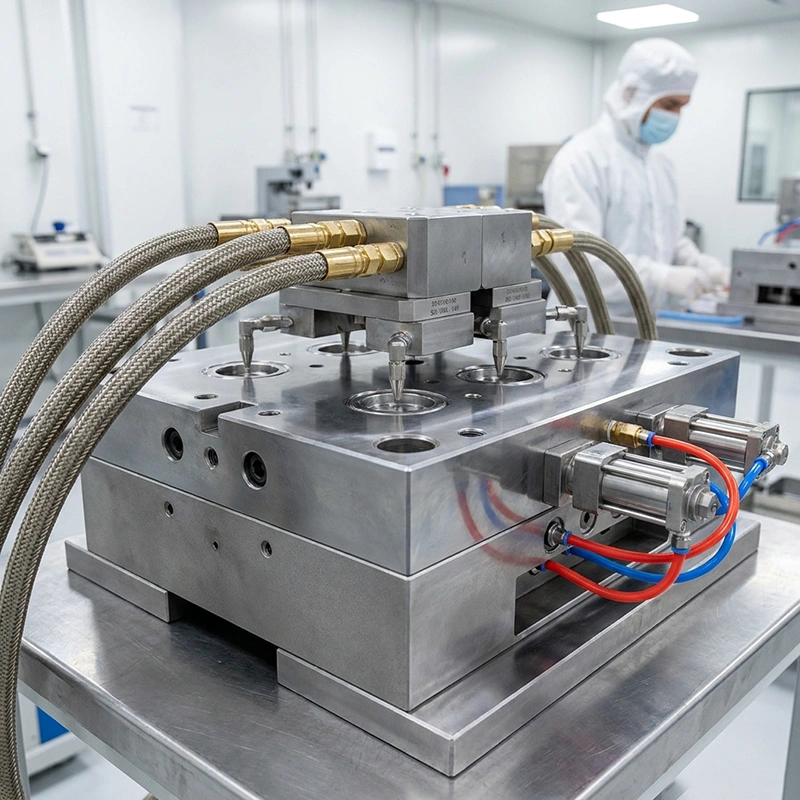
Liquid Silicone Rubber (LSR) Injection Tooling
LSR mold manufacturing demands extreme precision and thermal management. LSR mold designs may use cold-runner configurations and controlled gating where the part geometry and equipment justify them. Runner strategy, venting, demolding and process compatibility should be reviewed together.
- Integrated cold runner systems with water-cooling channels
- Cavity count matched to part geometry and production volume
- Engineered with precise thermal barriers between cold decks and hot cavities
- Surface details and inserts reviewed against the part drawing
Compression & Transfer Molds
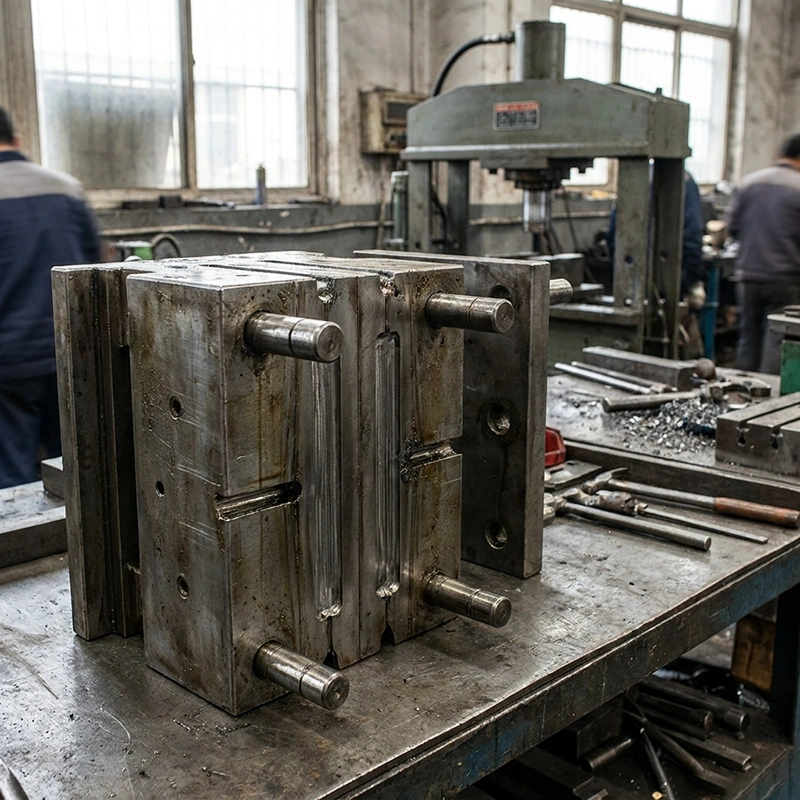
For processing high-consistency rubber (HCR) and industrial elastomers, we manufacture high-capacity compression and transfer molds. Transfer molds utilize integrated ITM pots and runner manifolds to distribute material evenly into closed cavities. Compression molds feature precision-ground land areas to ensure clean parting lines and simple deflashing.
- Precision-machined steel plates with optimized overflow channels
- Integrated transfer plunger and runner systems for balanced cavity filling
- Designed to resist severe clamping forces and hydraulic pressures
- Engineered for rapid demolding with manual or automated ejection plates
Tooling Materials & Engineering Specifications
We select premium tool steel and aluminum alloys based on your production volume, chemical corrosiveness, and cycle-time expectations.
Premium H13 Tool Steel
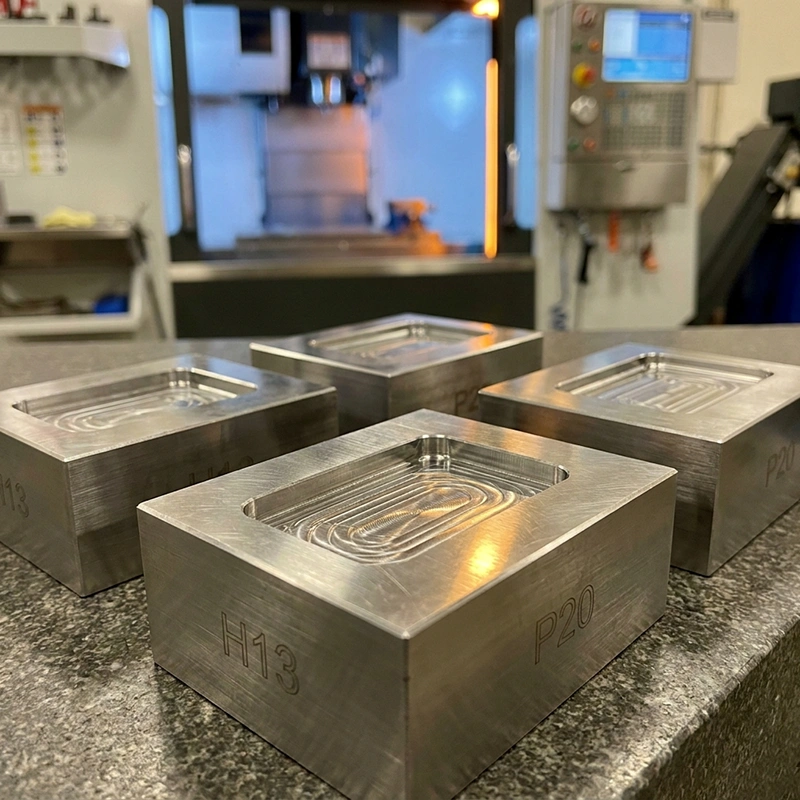
High-chromium hot-work steel providing outstanding resistance to thermal cracking and wear. Best suited for high-volume, abrasive compounds and medical LSR injection tooling.
Pre-Hardened P20 Steel
A versatile alloy providing excellent dimensional stability and uniform hardness. Highly cost-effective for medium-to-large compression molds and complex industrial plates.
High-Conductivity Aluminum
Specialized aluminum alloys featuring superior heat transfer and lightweight handling. Ideal for rapid prototyping, low-pressure molding systems, and accelerated cycle trials.
Advanced Surface Treatments
Available with Chrome plating, Teflon coatings, and chemical vapor deposition (CVD) to lower demolding friction, prevent residue build-up, and extend tool lifespans.
CAD/CAM Tooling Engineering & Simulation
A tooling review starts from your 2D drawing or 3D CAD file (such as STEP, IGES or DXF), along with material and production requirements. We optimize the cavity layouts, position parting lines to minimize flash, and locate venting channels to prevent burn marks or voids.
Critical dimensions, shrinkage allowances and sample inspection criteria are reviewed for the intended compound and process. Applicable tolerances and verification methods should be agreed for each project.
Consult a Mold Designer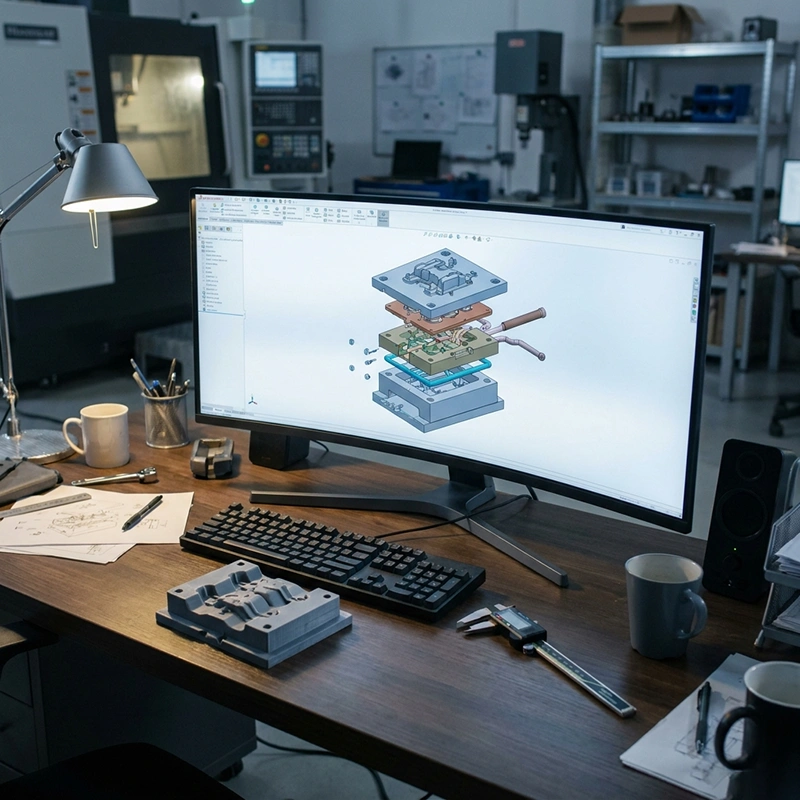
The 7-Step Tooling Lifecycle
A staged tooling workflow helps align the design, trial samples, inspections and approval criteria with each project.
DFM Review
Analyzing part drawings for demoldability, draft angles, and wall thicknesses.
Tool Design
Creating 3D assembly models with gate locations, venting, and overflow grooves.
CNC Machining
High-speed milling of mold cavities and plates within microscopic tolerances.
EDM Cavitation
Using electrical discharge machining (EDM) to produce intricate ribs or sharp corners.
Mold Fitting
Manual polishing, blue-matching, and assembly of plates, ejectors, and slides.
Sampling & Trial
Running initial press trials to produce physical parts for dimensional evaluation.
QA Release
Inspecting first-article products using 3D scanners before tooling approval.
Frequently Asked Questions
Find answers to technical questions about rubber and silicone mold manufacturing from our toolmaking specialists.
What should I submit for a mold manufacturing quotation?
How do you select between rubber, silicone and plastic mold designs?
How is material shrinkage considered during tooling design?
What should be defined before a production mold is approved?
Can tooling be reviewed for prototype or production quantities?
Prepare Your Tooling RFQ
Help the engineering team understand your requirements before quoting. Missing data can be discussed during the initial review.
Request a Tooling Quote