
Custom Silicone Keypad Manufacturer
Molded silicone keypads designed around your PCB, housing and user experience. Discuss custom key geometry, conductive contacts, tactile feel, legends and backlighting with Temco Rubber.

Keypad Design & Performance Options
Define the mechanical feel, electrical interface and appearance around the needs of your device.
Custom Designs
Key geometry, spacing, web thickness, travel, and tactile response can be developed to match your housing, PCB layout, and user-interface requirements.
Molded Silicone
One-piece molded silicone construction can support dust and splash resistance when the keypad is integrated with an appropriately designed enclosure and sealing interface.
Conductive Contacts
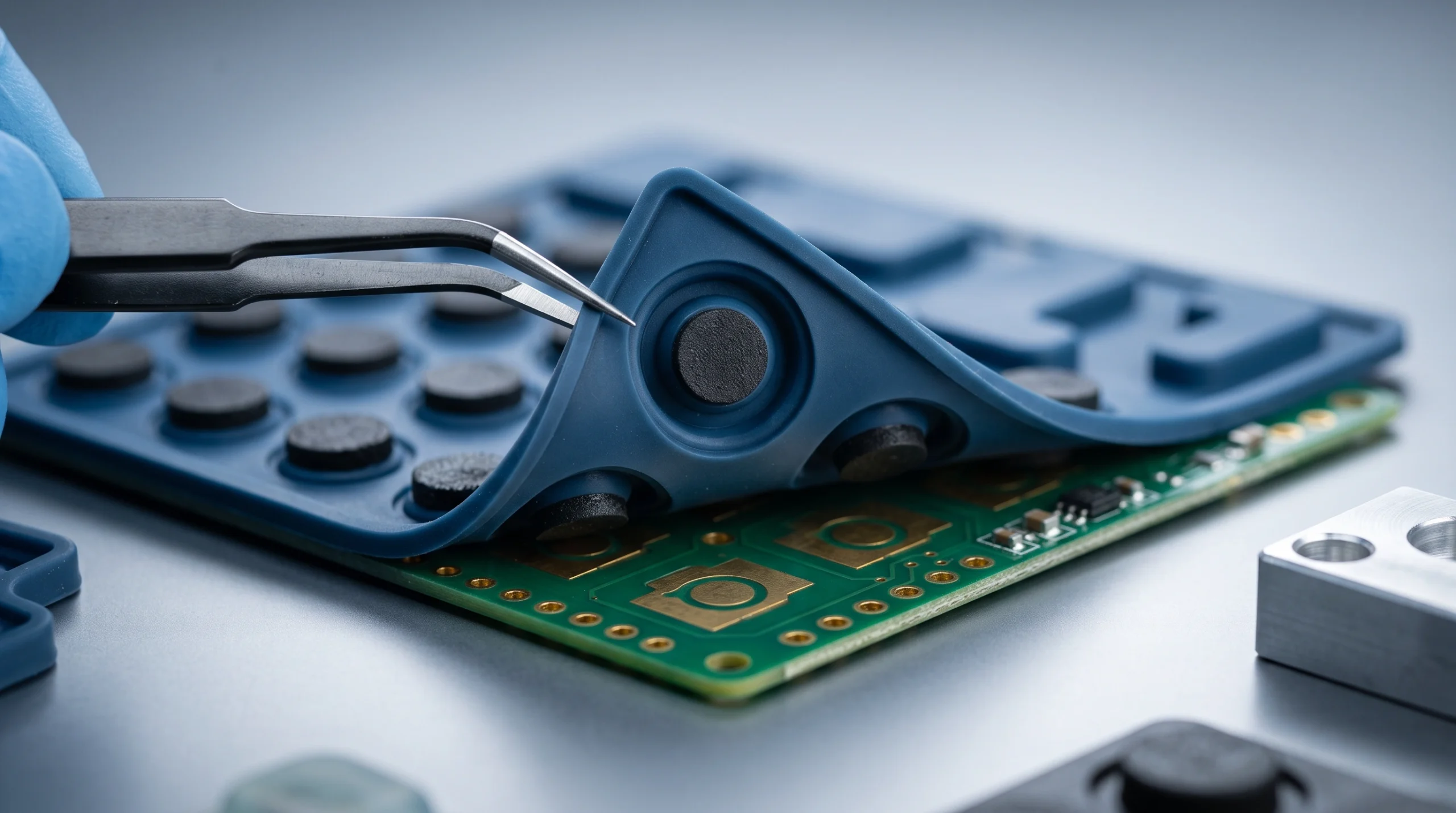
Conductive carbon pills and contact geometry can be matched to the PCB layout and target electrical switching requirements of the application.
Legends & Finishes
Pad printing, custom legends, selected protective coatings, and laser-etched backlit symbols can be specified according to branding, visibility, and wear requirements.
Custom Silicone Keypad Examples
Explore common keypad formats. Each example can be discussed with your own drawing, circuit layout and tactile requirements.


Silicone Keypads for Industrial & Harsh-Environment Applications
Silicone keypads are commonly used in industrial control panels, handheld devices, instruments, and other products that require repeated actuation and a flexible molded interface. Material selection, web geometry, actuation force, and surface treatment can be specified according to the operating environment and user-interface requirements.
Because the keypad can be molded as a single piece, it can also support enclosure sealing strategies against dust and fluid splashes when the housing, compression, and interface geometry are designed accordingly. For related molded components, explore our custom silicone parts manufacturing capabilities.
Get Technical Design Support
Keypad Marking & Surface Protection
Depending on the application, keypad legends and surfaces can be specified with printing, laser etching, backlighting features, and protective finishing options.
Laser Etching & Backlighting
For backlit keypad designs, translucent silicone can be coated with opaque layers and selectively laser etched so light from PCB-mounted LEDs passes through the required legends, icons, or symbols.
Tampo Printing (Pad Printing)
Pad printing can apply custom letters, numbers, symbols, and multicolor legends to flat or contoured silicone keys. Ink and any protective topcoat are selected according to appearance and wear requirements.
Protective Coatings & Plastic Caps
Protective matte or gloss coatings can be evaluated for applications that require improved wear resistance or a specific surface feel. Hard key caps or other secondary components can also be reviewed where the product design requires them.
Conductive Carbon Contacts & Switching
A common silicone keypad switching design uses conductive carbon pills on the underside of the keys. When an operator presses a key, the molded web collapses and brings the conductive contact onto the matching circuit area of the printed circuit board (PCB).
The contact closes the circuit so the electronic system can register the keypress. When the key is released, the molded silicone web returns toward its resting position and the electrical contact opens again.
- Contact geometry matched to the PCB layout
- Target contact resistance defined according to the application
- Actuation force and travel tuned through keypad geometry
- Cycle-life and electrical testing requirements agreed for the project
Custom Silicone Keypad Manufacturing Process
A typical project moves from design review and tooling through molding, secondary finishing, inspection, and production approval.
DFM Technical Review
We review your key spacings, draft angles, actuation heights, and conductive contact layouts to assess moldability and fit.
Silicone Compounding
The silicone grade, Shore A hardness, and color are selected according to the keypad design, environment, appearance, and tactile requirements.
Precision Mold Tooling
Tooling is designed and manufactured for the selected molding process, keypad geometry, expected production volume, and dimensional requirements.
Carbon Pill Integration
For designs using carbon pills, contact placement and geometry are set against the approved PCB and molding requirements.
Compression Molding
For HCR keypad production, pre-formed silicone rubber is compression molded under controlled heat and pressure to form the keypad structure and tactile web geometry.
Post-Curing & Printing
After molding, flash removal and the specified finishing steps may include printing, laser etching, coating, and post-curing when required by the material or application.
Switching & QA Testing
Inspection can include visual checks, dimensional verification, legend review, actuation-force measurements, and electrical contact testing according to the agreed project requirements.
Approved Production Handover
After design and inspection criteria are approved, agreed revisions, contact details, colors and artwork can be documented for repeat production.
Selected Silicone Keypad Projects
Published portfolio examples that connect our keypad manufacturing capabilities to real molded silicone keypad formats.
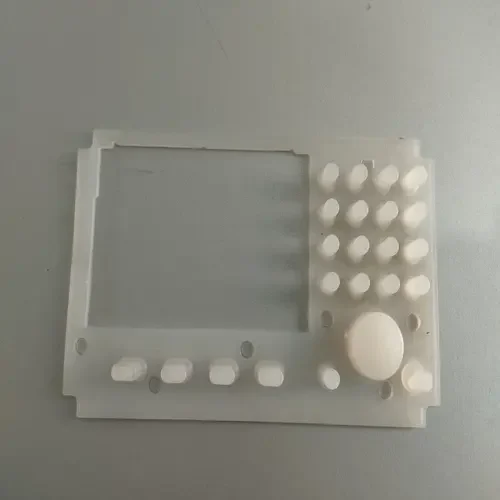
Silicone Keypad
A published custom molded silicone keypad example from the Temco Rubber portfolio.
View project →
Remote Control Keypad
A published keypad example for a remote-control user interface.
View project →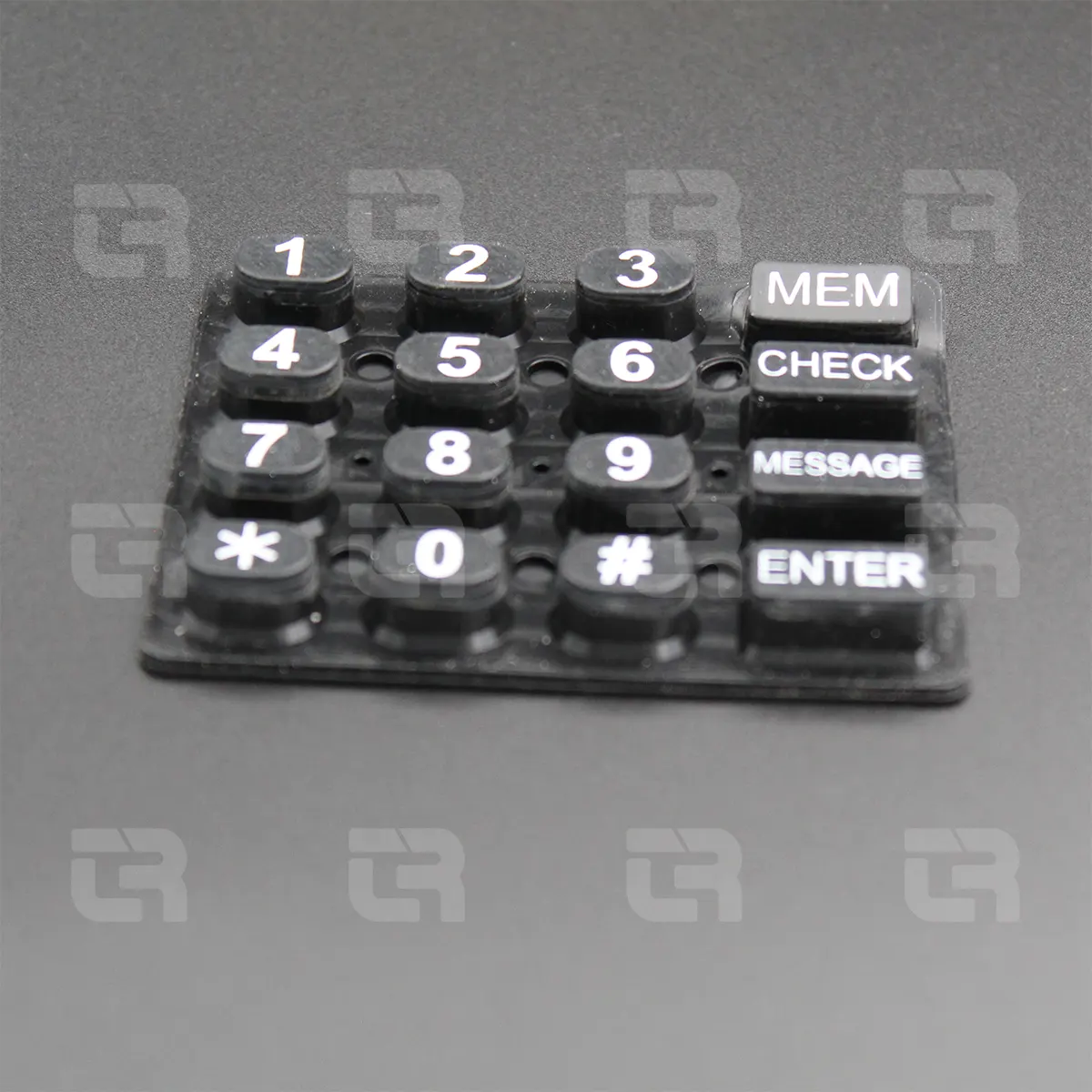
Security System Keypad
A published silicone keypad example for a security-system control interface.
View project →Frequently Asked Questions
Details that matter when specifying a custom silicone rubber keypad.
Can you manufacture a non-standard keypad shape or layout?
How are conductive contacts specified?
Can the key legends be backlit?
What determines key travel and tactile feel?
What should I send to request a keypad quotation?
Bring the right details to the first review.
Even an early concept can be assessed more efficiently when these four inputs are available.
2D/3D drawing or sample, board layout, housing and key spacing.
Target actuation force, key travel, web design and feedback.
Carbon pill placement, electrical targets, legends, color and lighting.
Operating conditions, inspection needs and estimated order volumes.