
Design and Manufacture of PET and Polyethylene Molds
Explore tooling for PET bottle stretch blow molding and HDPE/LDPE extrusion blow molding. Share your container drawing, resin, capacity and production requirements for a technical mold review.
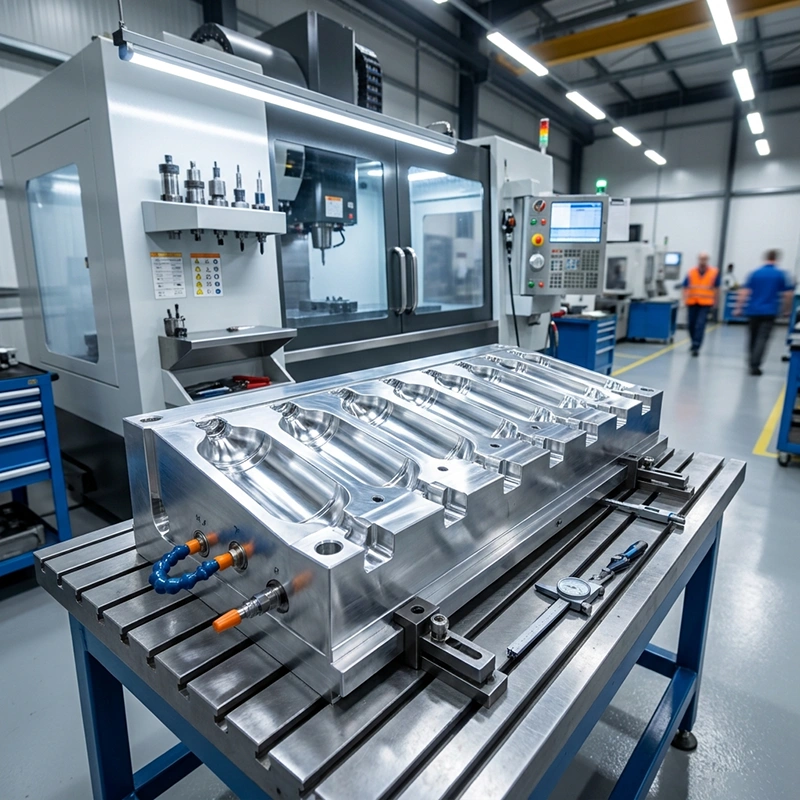
Bottle & Container Mold Projects
Explore selected projects already published by Temco. Specifications for your application can be reviewed separately.
Work Samples of Manufacturing PET & Polyethylene Molds
Explore examples of bottle and container tooling, from PET stretch-blow molds to polyethylene extrusion-blow molds. Tool construction depends on your product and machine.
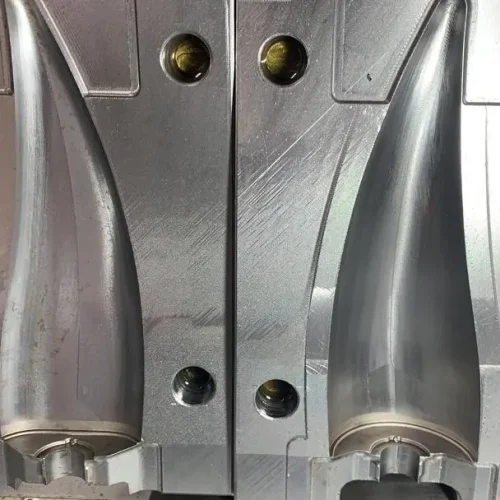
Multi-Cavity Aluminum PET Molds

Injection Stretch Blow (ISBM) Preform Molds

Heavy-Duty Steel HDPE Polyethylene Molds
PET Stretch-Blow vs. PE Extrusion-Blow Tooling
The mold layout, bottle preparation and machine requirements differ. These are general process distinctions, not a claim that every material can run on every machine.
Injection Stretch Blow Molding
Typically starts with an injection-molded PET preform. The preform is reheated, stretched and inflated in a blow mold.
- Typical application: PET packaging bottles
- Key data: preform, neck, stretch ratio
- Tooling review: cavities, cooling, venting, machine interface
Extrusion Blow Molding
A hot extruded parison is captured by mold halves and inflated into the container. Pinch-off and trimming need consideration.
- Typical application: containers, bottles and jerrycans
- Key data: parison, handles, parting line
- Tooling review: pinch-off, vents, cooling, machine interface
Blow Molding Methods & Technologies
PET stretch-blow and polyethylene extrusion-blow processes use different starting forms and machinery. Choose the method that fits your container material, geometry and production plan.
Injection Stretch Blow Molding (ISBM) for PET
In PET injection stretch blow molding, a preform is reheated and expanded against a blow-mold cavity using a stretch rod and air pressure. The required preform design, neck finish, stretch ratio and wall distribution depend on the intended bottle and machine.
- Process and cavity configuration selected for target production rates
- Most commonly applied to PET bottles; polymer choice must match equipment and process
- Preforms can be manufactured independently or sourced from third parties
- Ideal for cylindrical, rectangular, or oval transparent and colored bottles
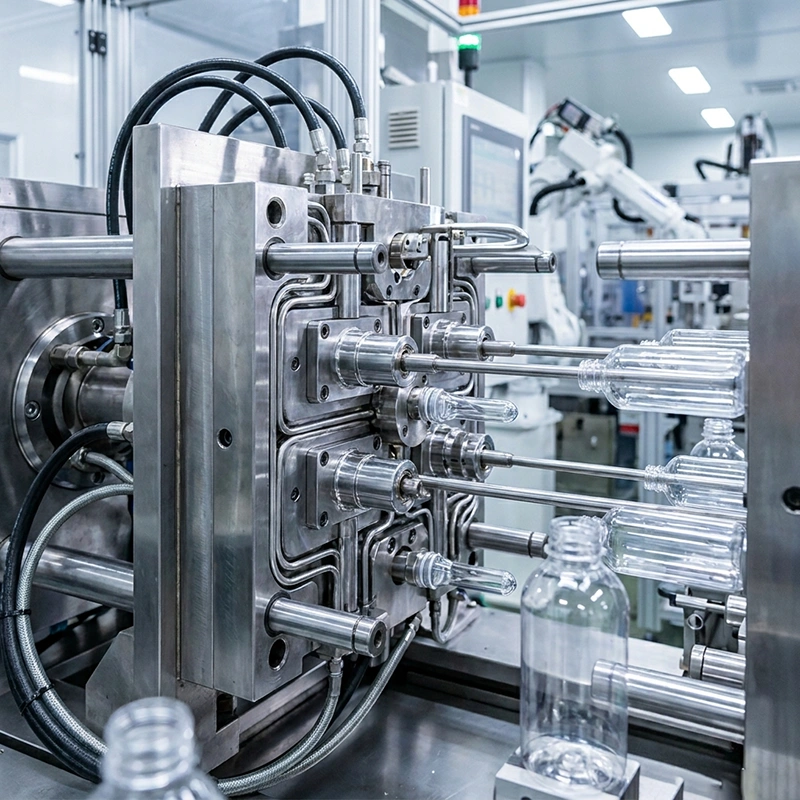
Extrusion Blow Molding for Polyethylene (HDPE / LDPE)
In extrusion blow molding, thermoplastic compound is melted and continuously extruded downward as a hollow parison tube. The cool steel mold halves clamp over the parison, and pressurized air is injected into the tube, forcing the plastic against the mold cavities. After cooling, the mold opens, and the hollow part is ejected with precise pinch-off geometry.
- Optimized for HDPE and LDPE polyethylene jerrycans, drums, and bottles
- Tooling material selected for production conditions and expected tool life
- Cooling details evaluated to manage temperature and distortion risks
- High flexibility in wall thickness control and handles integration
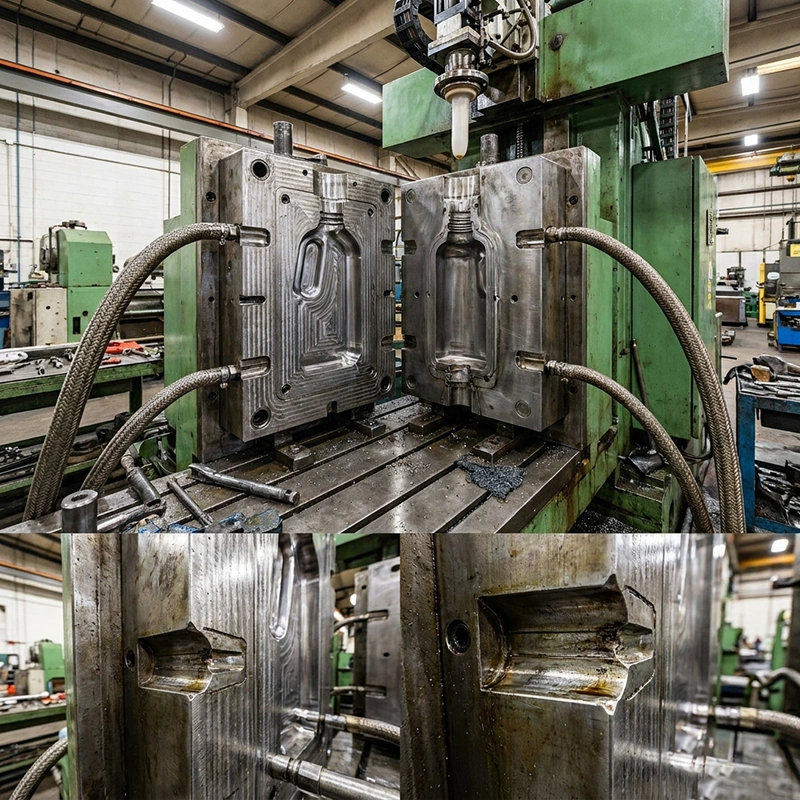
Blow Mold Tooling Classifications & Design Standards
Tooling material, neck finish, venting and container geometry should be selected against resin, equipment and expected quantity.
Aluminum Blow Molds
Primarily engineered for PET and Polycarbonate (PC) bottles. Offers rapid thermal dissipation, short cooling cycles, and high polished surface finish.
Steel Blow Molds
Specially manufactured for LDPE and HDPE polyethylene containers. Resistant to sliding wear and continuous mechanical pinch-off forces.
Preform & Neck Finish Design
Meticulous calculation of preform weight, neck opening dimensions, thread pitch, and wall distribution to prevent structural collapse.
Venting & Draft Angles
Air venting and demolding details should be designed to limit trapped air, manage surface appearance and support consistent part release.
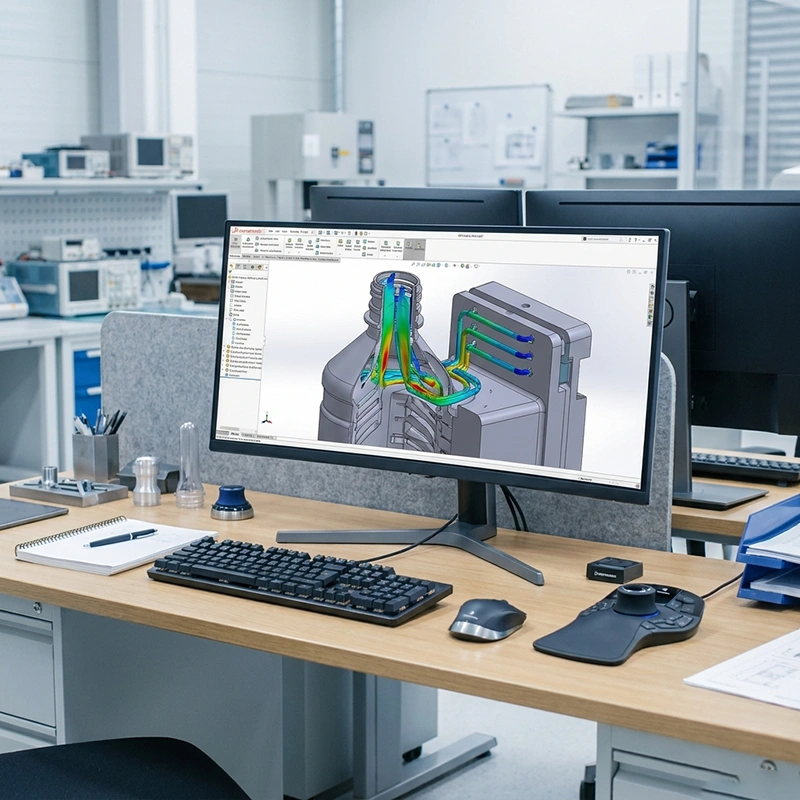
Our PET & Polyethylene Mold Production Workflow
An engineering workflow from bottle design and cavity planning to tooling trials, inspection and approval.
Container & Preform DFM
Evaluating bottle geometry, preform expansion ratio, wall thickness, and neck thread requirements.
Material & Cavity Selection
Select aluminum or steel tooling according to process, resin, equipment and expected volume.
CNC Tooling & Venting
Machine approved cavity details, parting lines, cooling and venting features.
Blower Machine Trial
Conduct equipment-matched trials and assess container dimensions, material distribution and appearance.
Sample Evaluation
Compare trial containers against agreed neck, dimensions, wall-distribution and visual requirements.
Tooling Approval
Record trial findings, agree any revisions and confirm sample acceptance criteria before release.
Frequently Asked Questions
Answers to common questions from engineering and purchasing teams planning PET or polyethylene mold tooling.
What information is required for a PET or PE blow-mold quotation?
What is the difference between PET ISBM and HDPE extrusion blow molding?
How are neck finish and preform details reviewed?
How do you decide between aluminum and steel blow molds?
What affects the cost of blow mold tooling?
What should be checked during a mold trial?
Prepare a Bottle Mold Inquiry
Include the details you have. The remaining process and tooling questions can be reviewed during the initial discussion.
Request a Technical Quote