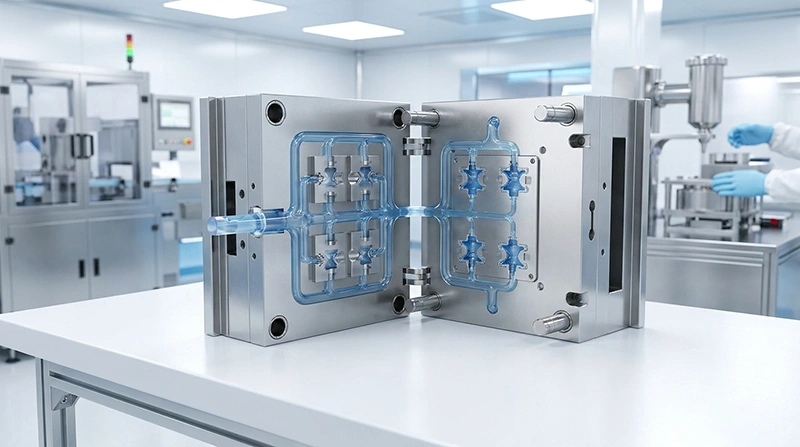
Liquid silicone rubber manufacturing

LSR Injection Molding for Custom Silicone Parts

Engineering-led development of precision silicone components, from CAD review and custom tooling to samples and repeat OEM production. Evaluate the appropriate molding route for your geometry, performance and expected volume.

Custom componentsMaterial selectionDFM & toolingOEM production
Molded silicone component examples used as LSR project reference imagery
Illustrative component imagery; specific portfolio items are not confirmed as LSR molded.
The manufacturing method

How liquid silicone rubber molding works

LSR processing meters and mixes two liquid silicone components, then injects the material into a heated cavity where it cures into an elastomeric part. The equipment and mold thermal design differ from thermoplastic molding.

Choosing an LSR route requires reviewing geometry, material, expected volume, mold details and acceptance criteria. It is one option among custom silicone manufacturing methods.

Four questions before tooling

Geometry & size
Are walls, details, parting-line and release conditions practical?
Grade & requirements
What hardness, color, media exposure and documentation matter?
Production volume
Do forecast quantities support the proposed molding route?
Quality acceptance
Which dimensions, surfaces and functional checks are essential?
Process overview

Four stages in LSR injection molding

Material preparation, cavity fill, cure and part handling must be coordinated for the selected tool and formulation.

01

Meter and mix

LSR components are metered and homogenized using a suitable mixing system.

02

Inject into the tool

The mixed material is delivered into the mold under controlled conditions.

03

Heat and cure

The silicone crosslinks in the heated cavity under the selected grade's cure conditions.

04

Demold and inspect

The cured part is released and reviewed against drawing and quality requirements.

Actual mold temperatures, cycle times, runner configurations and production parameters are part-specific; no fixed value is claimed here.

Process fit

When is LSR injection molding worth evaluating?

Injection molding may offer advantages in suitable recurring programs, but no process is the best choice for every silicone component.

01

Small & detailed features

Assess intricate geometry, flow paths, wall sections and demolding requirements.

02

Repeat OEM quantities

Compare tooling cost and stable production demand against annual volume forecasts.

03

Consistent process control

Evaluate repeatable material metering, curing and handling under a defined process plan.

04

Complex part geometry

Review gates, vents, thin features and areas sensitive to flash or tool fit.

05

Sealing & flexible parts

Coordinate material elasticity with sealing compression and assembly needs.

06

LSR vs. compression molding

Compare expected quantities, tool complexity, material, geometry and total cost.

Engineering decision: select the manufacturing route using the actual part, selected grade, tolerance expectations and production volume rather than a generic "LSR is better" rule.
Grade selection

Choose an LSR grade for the actual service environment

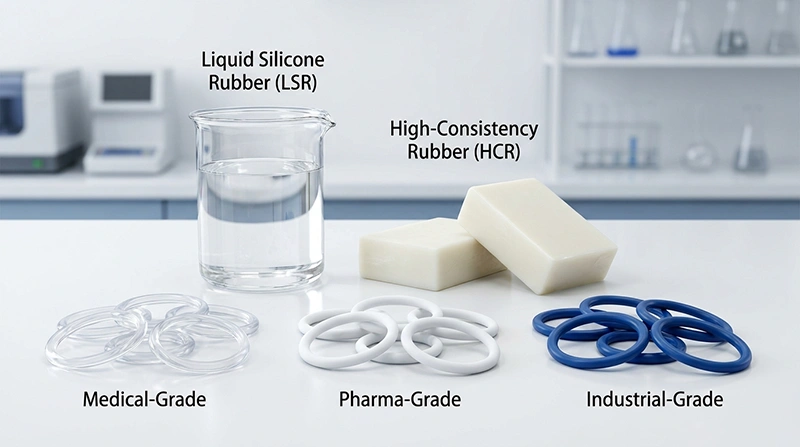
Silicone formulations vary in flexibility, tear strength, hardness, processing behavior and long-term exposure performance. Review material-specific data before committing to a design.

Medical, food-contact or other regulated applications require a defined grade and appropriate evidence. Do not assume every LSR compound has the same approval or qualification status.
  • ✓Mechanical response, tear, hardness and compression requirements
  • ✓Color, appearance and surface finish expectations
  • ✓Temperature, chemical and cleaning exposure
  • ✓Material documentation needed for the buyer's sector
Liquid silicone rubber material and grade selection reference
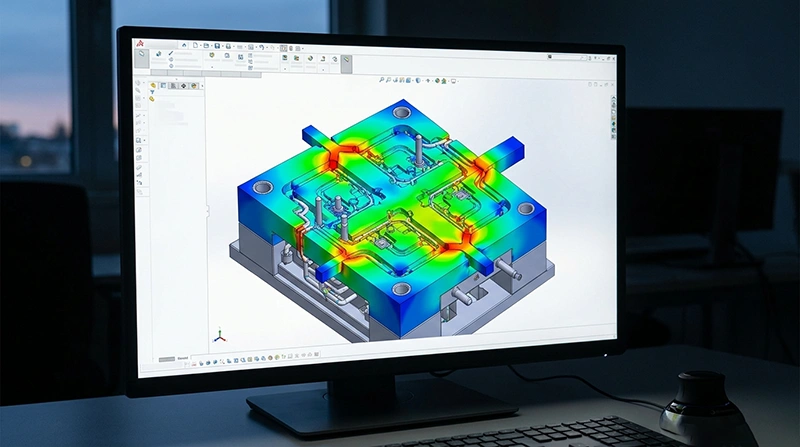
Silicone mold and injection tooling design reference
DFM and mold manufacturing

LSR mold details influence finished part consistency

Thin sections and detailed cavities still need deliberate tooling. Gate choice, parting-line fit, venting and release strategy should be discussed before tool commitment.

Wall & transitionsPlan material distribution and changes in cross-section.
Gate and vent placementAssess cavity fill and trapped-air release.
Flash controlReview parting surfaces, tool accuracy and process conditions.
Measurement planDefine critical features and inspection access.

Explore silicone mold design and tooling and the silicone mold manufacturing hub.

Potential application families

Custom LSR component projects to discuss

These are possible use categories for LSR assessment, not confirmation that each product shown in Temco's portfolio was made using this process.

01

Custom sealing parts

Washers, gaskets and profiles where geometry and contact surfaces matter.

02

Diaphragms & valves

Flexible silicone membranes requiring attention to movement, pressure and assembly.

03

Keypads & controls

Elastic interfaces and molded button features for OEM equipment.

04

Small functional parts

Detailed elastomeric components evaluated against drawing and use conditions.

05

Overmolded concepts

Multi-material components where adhesion and process feasibility need assessment.

06

Industrial OEM assemblies

Custom silicone features specified for a product or equipment family.
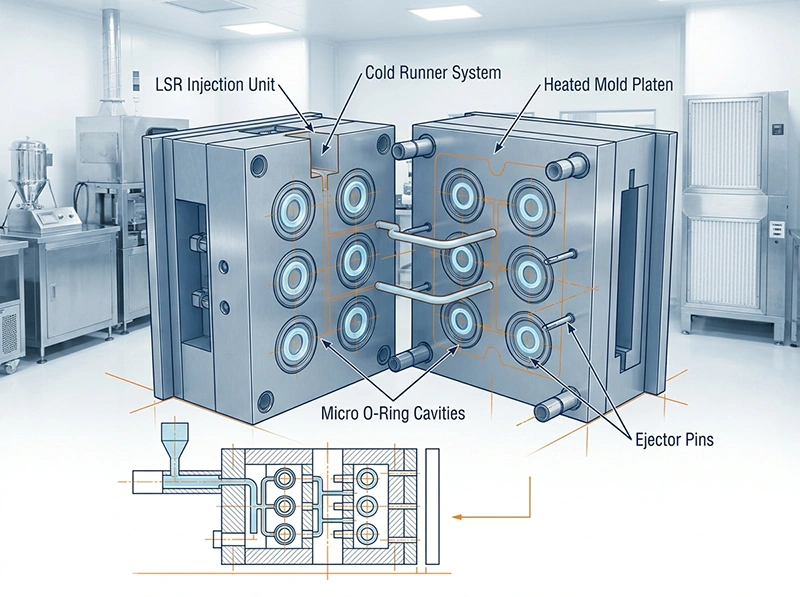
Illustrative silicone O-ring and molded sealing component examples

Sealing geometry is one common project starting point

For precision seals, evaluate flange interfaces, compression, material exposure and production volume together. If an injection route is not suitable, review alternate silicone manufacturing methods.

Explore custom silicone seals ↗
Quality planning

Set inspection requirements before sample approval

A practical control plan should reflect the mold, material grade, critical interfaces and functional operating conditions.

Process and geometry

  • Drawing revision and critical dimension checks
  • Flash, surface appearance and gate-related features
  • Part handling and molding consistency
  • Sampling, inspection records and traceability if specified

Material and function

  • Hardness, cure and relevant physical property requirements
  • Assembly fit, sealing or movement checks
  • Application-specific environmental testing
  • Documentation or buyer-defined qualification measures

These are possible project acceptance items, not claims of specific certifications, tolerances, equipment or guaranteed test results.

Request for quotation

What to include in an LSR injection molding RFQ

Share your drawing, estimated production volume and the part's required behavior. Identify any unresolved material or compliance questions so they can be assessed early.

  • 2D / 3D CAD or physical part
  • Critical dimensions and wall details
  • Material preference and hardness
  • Media and temperature exposure
  • Functional and inspection requirements
  • Annual production and prototype quantity
  • Assembly interface and fit constraints
  • Project timing and revision
Technical FAQ

LSR injection molding questions

Key decisions for process selection, tooling, material and project approval.

What is liquid silicone rubber injection molding?

LSR processing meters and mixes liquid silicone components, injects them into a heated mold and cures the material into an elastomeric part. Processing conditions depend on grade and geometry.

When should LSR be chosen over compression molding?

Compare geometry, material, recurring volume, tool investment and final quality requirements. LSR is not always the most practical or cost-effective option.

Can my CAD model be reviewed for LSR tooling?

Yes. CAD or a part drawing provides a starting point for reviewing wall geometry, gates, venting, demolding, mold design and quality controls.

Do all LSR grades have identical temperature or hardness limits?

No. Temperature performance, hardness and chemical compatibility are grade-specific and must be reviewed against actual service conditions.

Are all LSR parts medical-grade or food-contact certified?

No. Regulated uses require the correct grade and evidence for the exact intended application. No blanket certification is implied.

Can an existing silicone part be converted to an LSR process?

Possibly. A process feasibility study should compare existing material and tool design against geometry, duty cycle and production economics.

What drives tooling cost?

Part geometry, number of cavities, gating, venting, runner design, production volume and critical dimensions can influence tooling scope.

What should I send for a quote?

Provide CAD or a sample, expected quantities, selected or proposed grade, operating conditions, critical features and the target schedule.

Planning a molded silicone part?

Discuss an LSR approach or explore related services: custom silicone seals, silicone diaphragms and silicone parts manufacturing.

Request a Project Review ↗