OEM silicone sealing solutions

Custom Silicone Seals Manufacturer

Application-specific molded silicone seals for housings, valves and industrial assemblies. Develop profile geometry, material selection, tooling and inspection requirements around the real seal interface—not an off-the-shelf assumption.
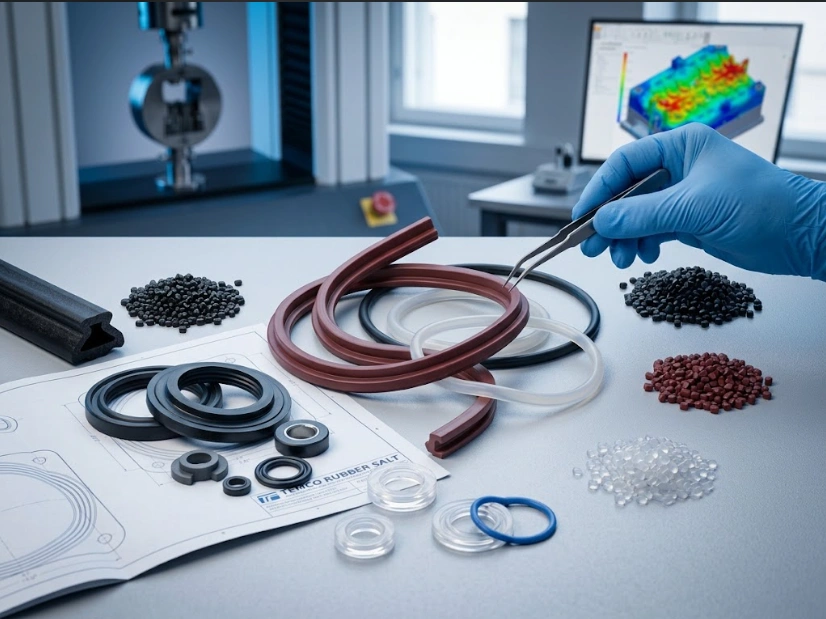
Custom profilesMold toolingDesign-for-manufacturingSample to production
Custom molded silicone seals and sealing components
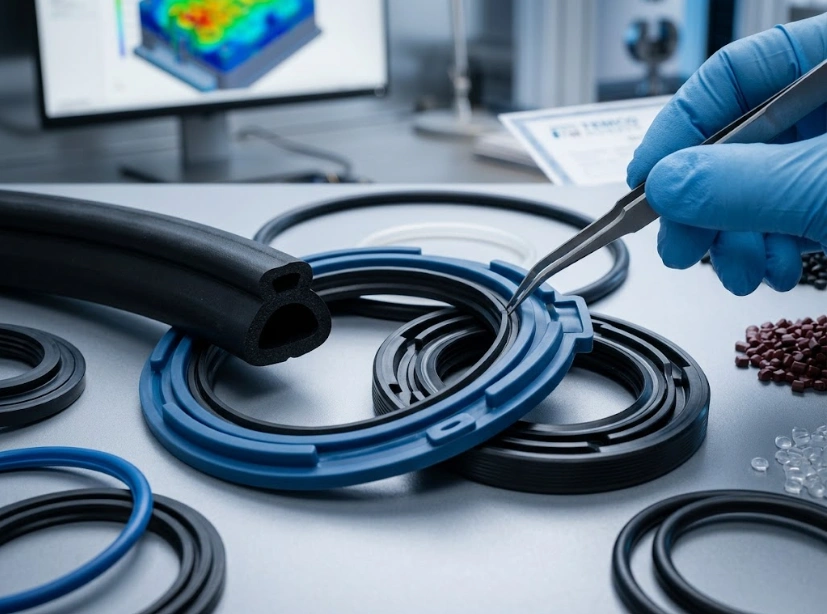
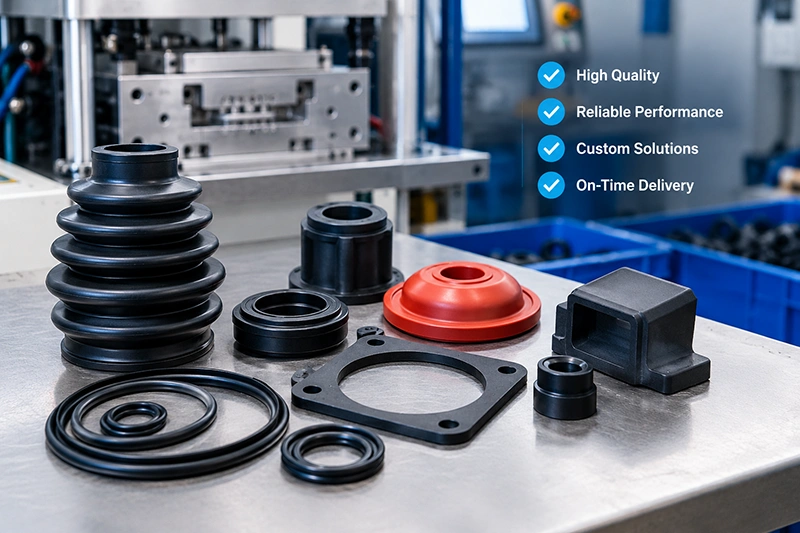
Representative silicone seal imagery — final properties depend on the project specification.
Sealing system first

Build around the interface, pressure and movement

The right molded seal depends on how the mating parts compress or move, the media being sealed, the installation method and the conditions throughout service.

Instead of starting from a generic hardness or profile, an OEM enquiry should define sealing load, groove dimensions, permissible leakage, temperature exposure and required replacement or service life.

Temco's custom silicone manufacturing and mold-design services can be considered together with material selection and validation requirements.

Explore silicone parts manufacturing ↗

Questions that shape the seal design

Static or dynamic?
Define whether the surfaces are fixed, rotate, reciprocate or cycle through motion.
How is it installed?
Share groove, flange, compression limits and mating-component tolerances.
What does it contact?
List oils, water, gases, cleaning chemicals, UV or outdoor exposure.
What counts as acceptance?
Specify leakage allowance, inspection plan and relevant qualification requirements.
Custom seal geometry

Molded silicone seal configurations

Geometry affects the available contact area, deformation and sealing response. The examples below are design families to review, not promises of a standard part number.
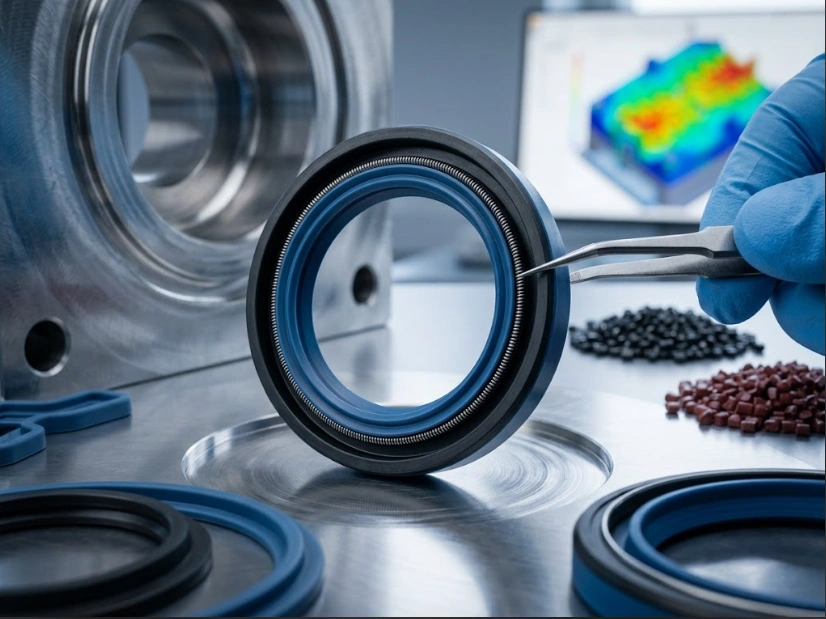
Lip & rotary seals custom silicone seal configuration

Lip & rotary seals

For sealing interfaces involving shafts or moving surfaces; friction, wear and geometry need specific evaluation.
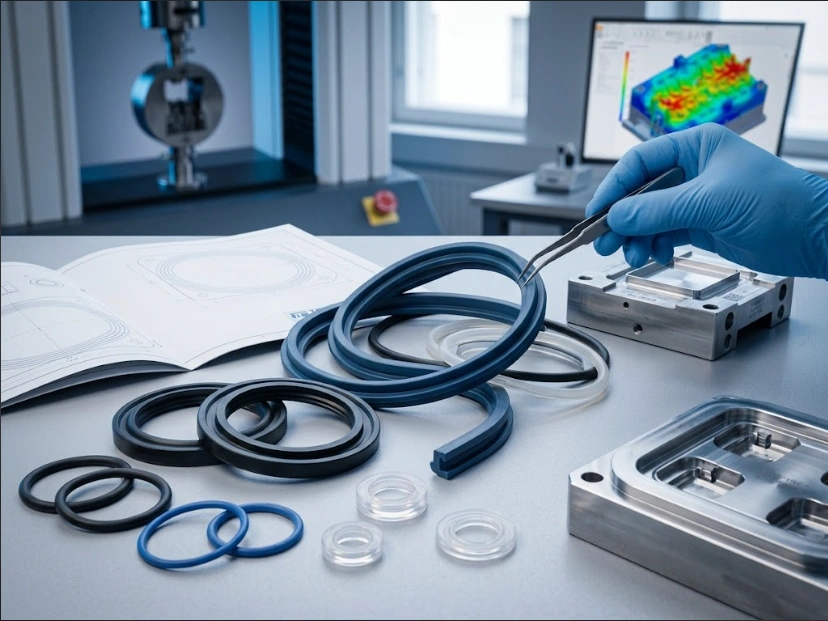
Silicone diaphragms custom silicone seal configuration

Silicone diaphragms

Flexible pressure-responsive membranes for selected valve or regulator designs; see our dedicated diaphragm service.
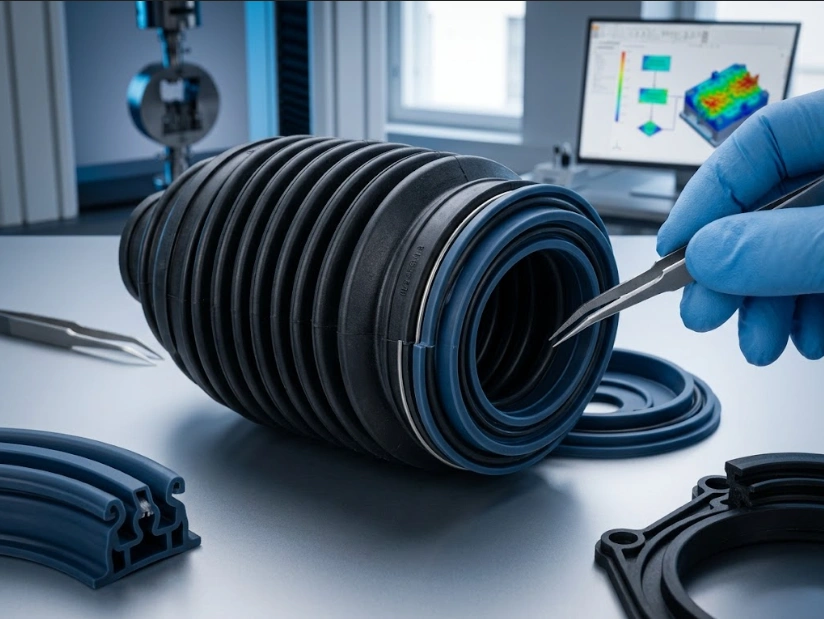
Bellows & boots custom silicone seal configuration

Bellows & boots

Protective or flexible features where articulation, fit and environmental sealing must work together.
Custom T- & D-profiles custom silicone seal configuration

Custom T- & D-profiles

Molded profile geometries to evaluate for housings, covers and compression sealing interfaces.
Material selection

Material and compliance depend on your application

Silicone grades differ in mechanical properties, heat resistance, media compatibility and processing needs. Design requirements should drive the material shortlist.

01

Silicone grade & hardness

Select a formulation and hardness range considering seal load, compression set, geometry and service temperature. Approve the actual grade with project data.

02

Media & chemical exposure

Review fluid, gas, oil, cleaners and contact duration. For demanding media, compare alternatives such as fluorosilicone when appropriate.

03

Regulatory requirements

If food-contact, medical, automotive or other standards apply, identify the exact rule and documentary evidence required before quoting compliance.

Qualification note: There is no single universal silicone operating range or blanket FDA, medical, IP67/IP68 or ISO certification for every custom seal. Any performance or compliance claim must be supported by the selected material, assembly and appropriate evidence.

Precision molded silicone sealing component and tooling process reference
Tooling to repeatable production

Plan production from CAD to accepted parts

Part geometry, mold tooling, material processing and inspection planning need to work together. Review manufacturability before committing to expensive tooling changes.

01

DFM & drawing review

Define interfaces, tolerance stack-up, parting line and draft constraints.

02

Tooling concept

Assess mold flow, venting, cavity details and demolding.

03

Molding route

Evaluate compression or LSR injection according to grade, geometry and planned volume.

04

Samples & checks

Inspect critical parts against agreed drawing and approval criteria.

Learn about silicone mold manufacturing and LSR injection molding.

Validation planning

Define seal performance before acceptance

Testing should follow your operating conditions, part drawing and assembly requirements. An agreed inspection plan is more useful than an unsupported universal pass/fail claim.

Dimensional & material review

  • Critical molded features, profile cross-section and drawing revisions
  • Compression interference, groove dimensions and visual features
  • Relevant hardness, cure and compression-set requirements
  • Batch identification or traceability where specified

Application-specific performance

  • Leak testing under specified pressure and media
  • Temperature cycling or aging based on service exposure
  • Dynamic friction or wear considerations where relevant
  • Documentation or conformity evidence required by the buyer

Listed checks are potential project acceptance measures; no specific test equipment, pass criteria, certification or batch-testing commitment is implied without an agreed specification.

OEM quotation checklist

Send a useful custom silicone seal RFQ

Provide drawings or a physical sample together with key conditions. For a replacement seal, include information about the mating groove and known failure mode.

  • 2D / 3D CAD or sample
  • Seal profile and critical dimensions
  • Static / dynamic operation
  • Compression, pressure and temperature
  • Media, cleaners and contact duration
  • Hardness or material preference
  • Relevant standards / tests
  • Sampling and annual production volume
Buyer FAQ

Questions about molded silicone seals

Technical considerations to clarify before tooling and quotation.

Can Temco make a custom silicone seal from my drawing?

Submit a drawing, mating-part geometry and application conditions for a DFM review. The manufacturable profile, tooling approach and acceptance criteria are assessed for the specific design.

How should I choose silicone hardness for a seal?

Hardness is one input, not the full specification. Groove design, compression, contact pressure, media, temperature and compression set also influence selection.

Does silicone work with every oil or chemical?

No. Compatibility depends on grade, medium, temperature and duration. Submit the actual exposure list so a suitable material or alternative can be reviewed.

Can you help select between LSR and compression molding?

Yes. The potential molding route depends on geometry, cross-section, material form, tooling, target volume and qualification plan.

Do all your silicone seals come with FDA or ISO certification?

No universal certification is implied. Any specific food-contact, medical, industry or testing requirement must be defined and independently supported for the selected material and product.

What information helps speed up quotation?

Share CAD or a sample, seal interface, critical dimensions, material environment, expected volume and acceptance requirements. Email files to info@temcorubber.com or use the contact form.

Discuss your next sealing component

Send the specification, and browse adjacent capabilities: silicone gaskets, silicone O-rings and silicone diaphragms.

Start a Technical RFQ ↗

Leave a Reply

Your email address will not be published. Required fields are marked *

3 × three =