Custom Silicone Washer Manufacturer
Custom-molded silicone washers for industrial sealing, spacing, vibration control and electrical insulation. Develop dimensions, cross-section, compound and tooling around your actual installation and OEM production requirements.
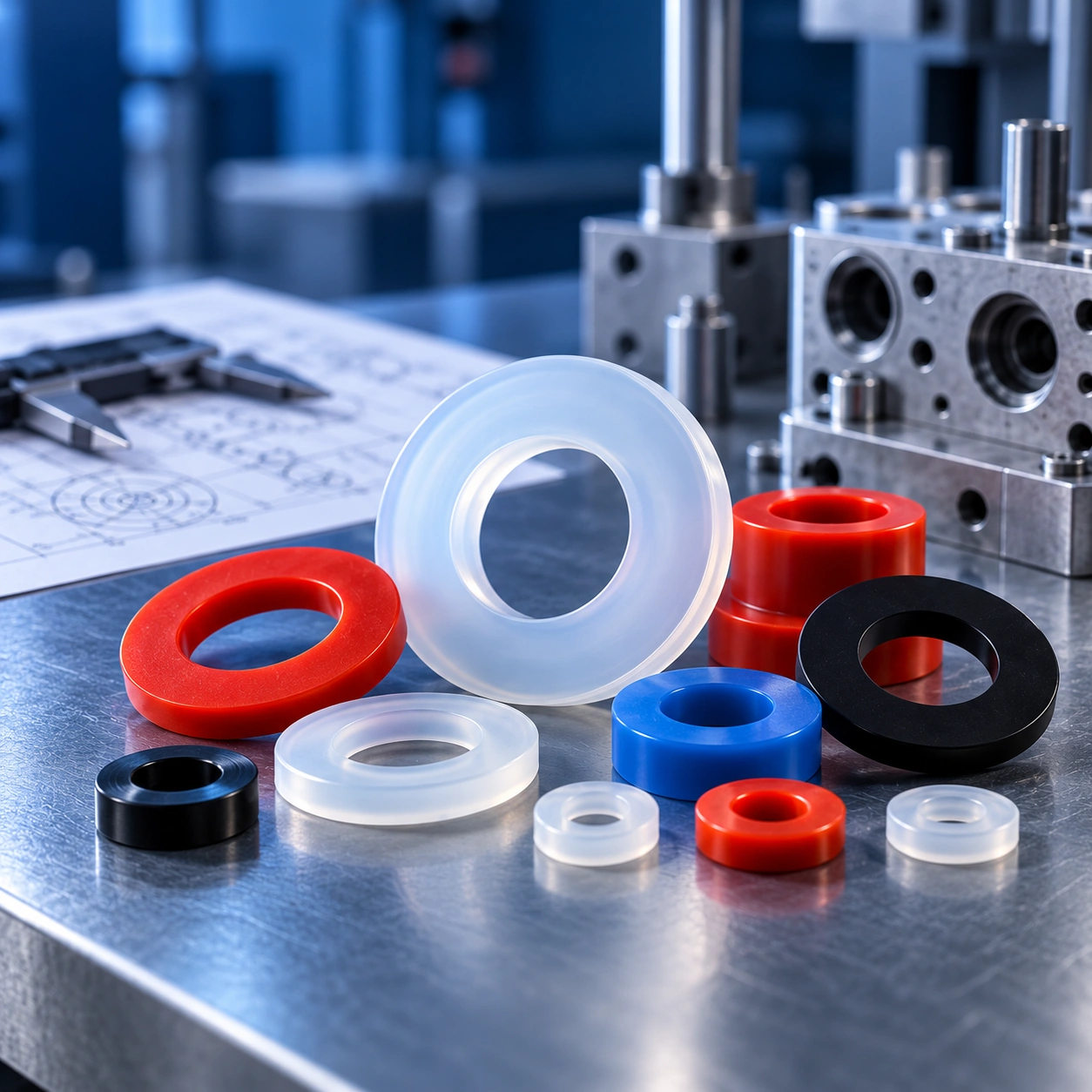
Real washer components and mold work
Explore actual Temco portfolio entries before reviewing your drawing. Component projects and tooling projects are clearly identified; the reference imagery is not proof of a particular manufacturing method or performance rating.
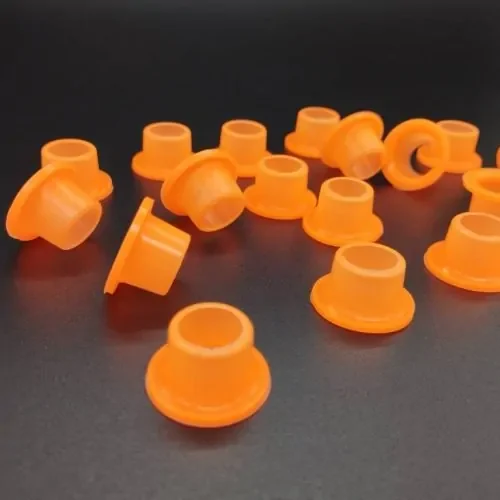
Silicone Washer
Published silicone washer component
View project ↗
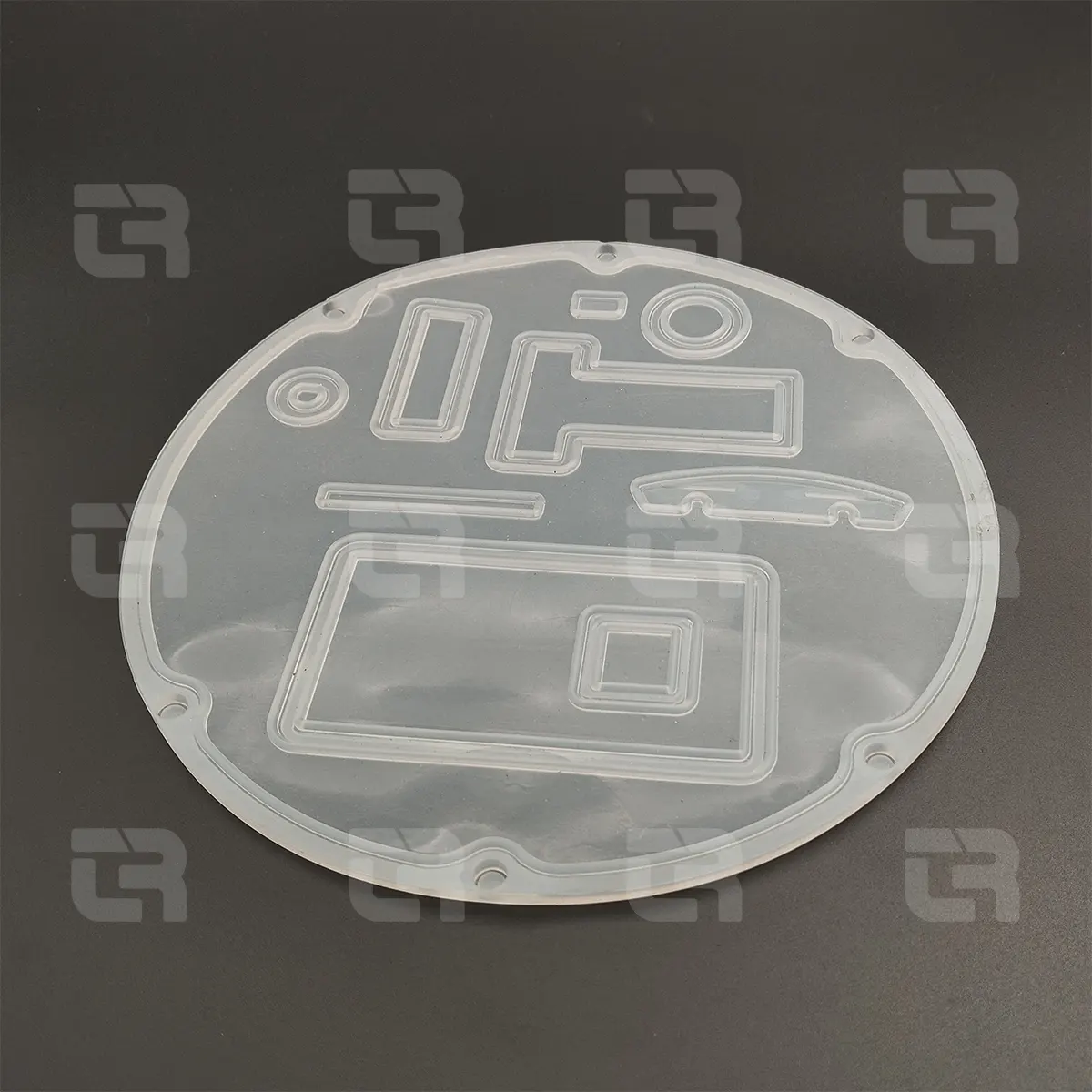
02 / ELASTOMERIC PARTSSilicone Washer and O-Ring
Published washer and O-ring component project
View project ↗Silicone Washer and O-Ring Mold
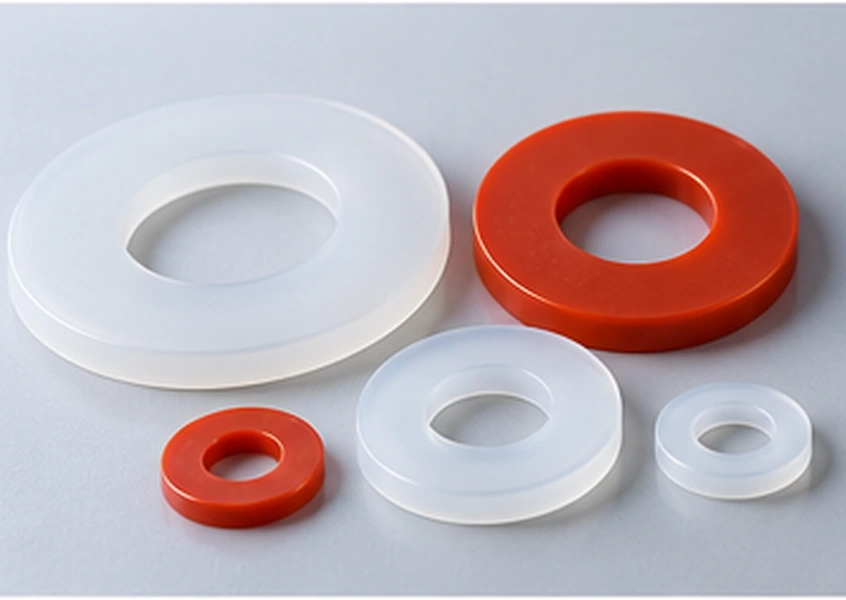
Published tooling project; image is a washer reference, not necessarily the featured mold
View project ↗Specify how the washer fits and functions
Silicone washers may provide localized sealing, spacing, buffering or electrical isolation. Their performance depends on the interface, installed compression, thickness and chosen compound—not on outside diameter alone.
For replacement washers, share the mating parts, existing groove or fastener arrangement, and known failure mode. For new products, a drawing or part sample supports an early design-for-manufacture review.
Explore silicone component manufacturing ↗Critical specification questions
- Geometry
- OD, ID, thickness, flatness, steps or grooves, and key tolerances.
- Installation
- Clamping force, compression target, fastener, groove or mating surface.
- Service environment
- Temperature, vibration, fluids, cleaning and electrical requirements.
- Production scope
- Prototype quantity, target annual volume and inspection criteria.
Flat, stepped and custom washer profiles
The washer geometry should match the surrounding component and desired function. These shapes are reference design families, not finished specification guarantees.
Flat silicone washers
For planar interfaces; review load distribution, compressibility and dimensional requirements.
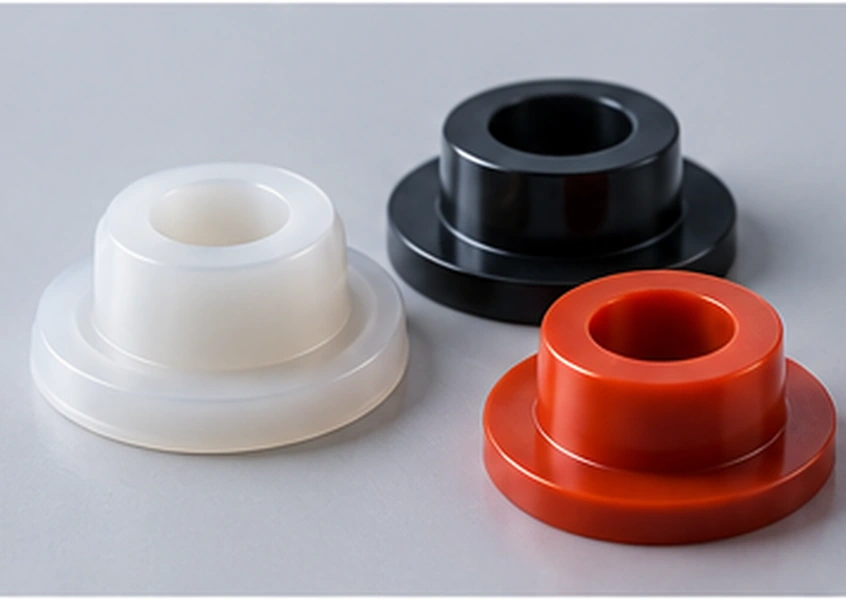
Stepped washers
Multi-level profiles for assemblies requiring location, controlled contact or different heights.
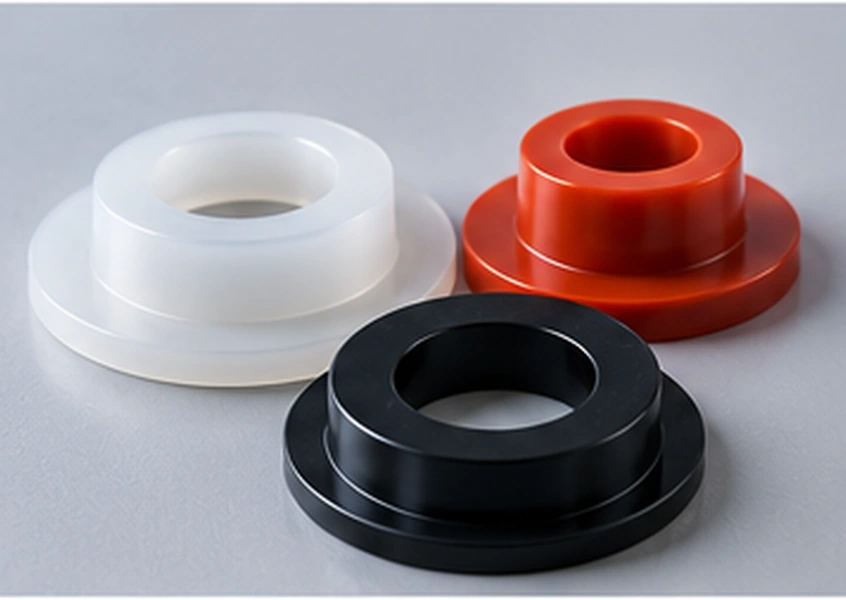
Flanged silicone washers
For positions where a flange or shoulder supports alignment or interface coverage.
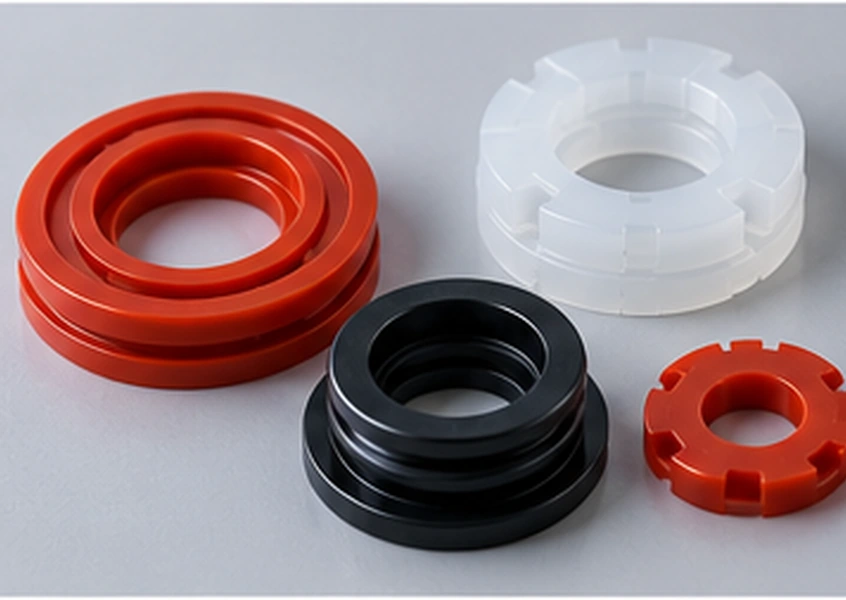
Grooved & custom profiles
For nonstandard interfaces where grooves or molded features shape the fit and sealing contact.
Silicone washer applications in OEM assemblies
One washer geometry can serve more than one function, but material data and installation conditions determine whether the design is appropriate.
Sealing & fluid systems
Evaluate static sealing interfaces, media compatibility, contact pressure and permitted leakage.
Vibration & damping
Use case-specific hardness, geometry and load data to evaluate isolation or cushioning.
Electrical separation
Discuss insulating requirements, dielectric properties and component geometry with the OEM.
Enclosures & equipment
Review fit, fastener compression, outdoor exposure and service-cycle needs.
Material selection is not a one-number decision
A Shore A value or generic silicone datasheet alone does not establish suitability. The grade and its processing route must be confirmed for the installed design.
Silicone grade & cure
Consider VMQ grade, cure chemistry, hardness and physical data suitable for the application.
Compression & resilience
Define the required sealing compression and evaluate compression set under the intended load and temperature.
Environment & compliance
Review media, temperature, UV/ozone exposure and the exact evidence required by any regulation.
Temperature and hardness: operating ranges vary by grade and conditions. The figures on the old page were generic reference values; no universal temperature, hardness, medical or food-contact certification is claimed for all washers.
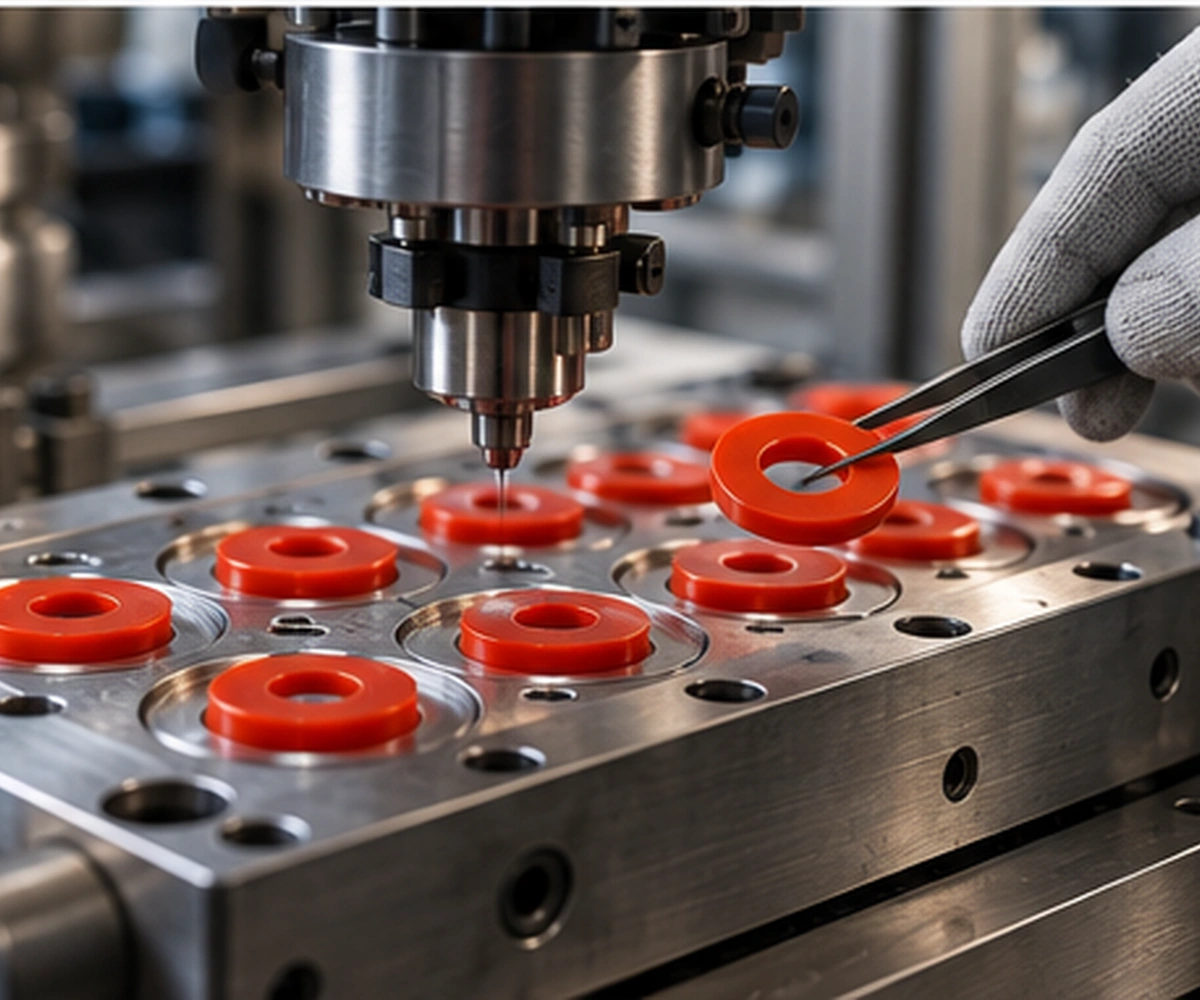
From washer drawing to molded part
Custom geometries need coordinated material choice, tooling and sample acceptance. Early engineering review helps expose risks before production tool commitment.
See silicone mold manufacturing and LSR molding for related processes.
Control the dimensions and features that matter
Specify tolerances, test methods and acceptance thresholds around the washer's interface rather than assuming one standard tolerance applies to every molded component.
Dimensional and visual review
- OD, ID, thickness and molded profile details
- Flash, parting line, surface and cosmetic requirements
- Critical groove or installation interfaces
- Drawing revision and batch control if required
Material and function checks
- Hardness, cure and compression-related behavior
- Sealing or load response in the actual assembly
- Environmental exposure and media compatibility
- Any buyer-specified documentation or qualification evidence
These are potential project-specific checks; no unverified inspection equipment, standard certification or fixed tolerance is implied.
Silicone washer or silicone O-ring?
Both can perform sealing functions, but the right choice depends on the interface rather than the part name.
Silicone washers
Often use a flat or stepped section for face sealing, spacing or load distribution. Review contact area, compression and mating surfaces.
Silicone O-rings
Commonly use a circular cross-section within an appropriate groove for sealing. Groove geometry, squeeze and movement govern the design. Explore custom silicone O-rings ↗
What should be in your silicone washer RFQ?
Send a drawing or sample plus application requirements, with the critical dimensions clearly highlighted. Discuss material grade and tooling options before final qualification.
- 2D / 3D CAD or physical sample
- Outside & inside diameters
- Thickness and profile features
- Critical tolerances and interface
- Load, pressure and movement
- Temperature and media exposure
- Material / hardness preference
- Sampling and annual order volume
Custom silicone washer questions
Practical answers to material, process and dimensional topics before a production quotation.
Can you manufacture a washer from our drawing?+
Share CAD or a sample, OD, ID, thickness, required profile and application. A manufacturing and tooling review can be based on these inputs.
What sizes and tolerances are achievable?+
They depend on the compound, geometry, tooling, process and inspection method. Critical requirements should be reviewed against the drawing before quotation.
Is a silicone washer the same as an O-ring?+
No. A washer commonly provides a flat or shaped contact surface, while a conventional O-ring uses a circular cross-section and a matching gland or groove.
How do we choose a silicone hardness?+
Specify compression load, required sealing force, temperature, exposure and any existing material target. Hardness alone does not determine sealing performance.
Are all silicone washers food-safe or medically certified?+
No. Any compliance requires a particular grade, use case and evidence. There is no universal certificate for every silicone washer.
Can molded washers be used for vibration damping?+
Potentially. Damping suitability depends on material behavior, geometry, compression, excitation and the surrounding assembly.
Which manufacturing process should we use?+
Compression molding or LSR injection may be considered depending on material, complexity, production volume and tooling economics.
How do we request a quote?+
Send a drawing or sample, dimensions, critical tolerances, material requirements and estimated volumes using the contact form or email.
Ready to discuss a silicone washer project?
Share your drawing and engineering requirements. For related parts, explore custom silicone seals and silicone parts manufacturing.
