Custom Silicone Hose & Precision Tubing
Application-specific silicone tubes, reinforced hose concepts and molded connections for OEM projects. Review inside diameter, wall thickness, bend geometry, media exposure and validation requirements before finalizing the manufacturing route.
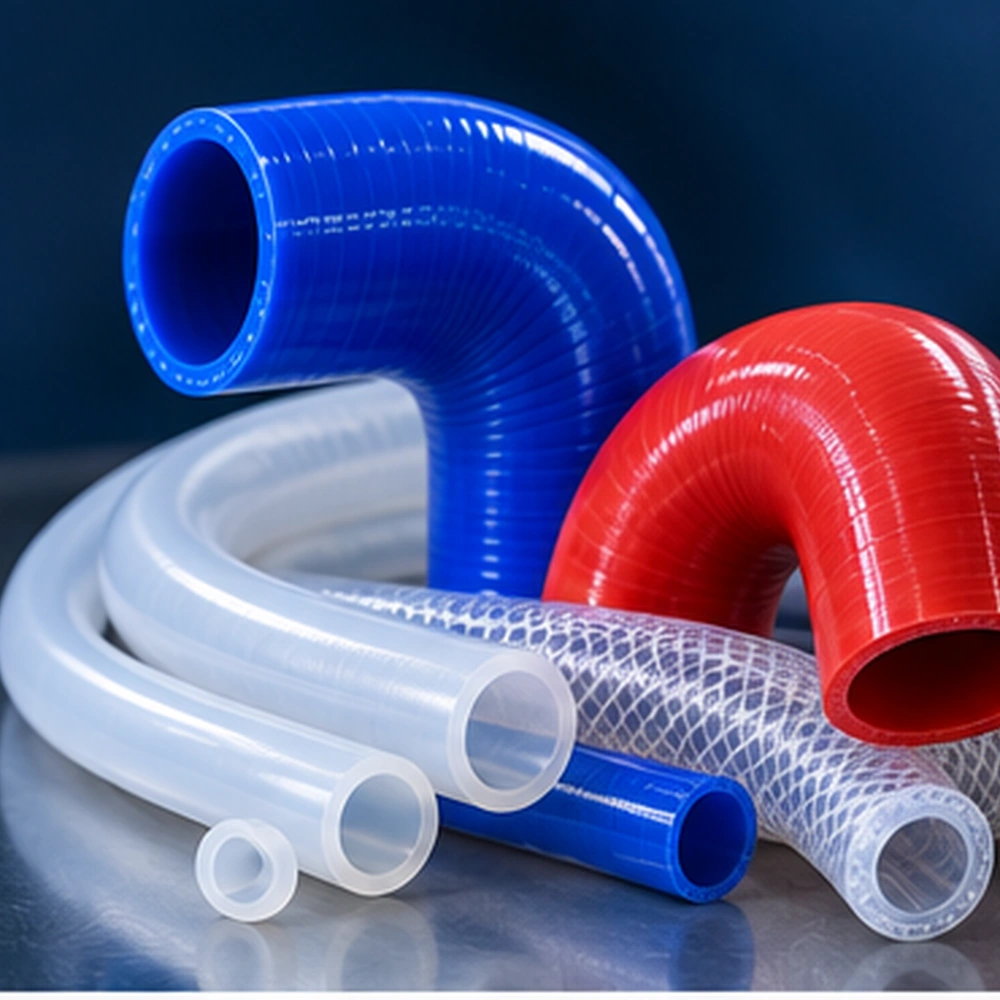
Related silicone tube project
One directly relevant silicone tubing example is published in Temco's portfolio. The listing does not itself establish a specific medical certification, production method or material grade.
A published Temco project involving a silicone tube for a medical-device context. Discuss actual project-specific cleanliness, dimensional and regulatory requirements before making any suitability claim.
View published tube project ↗Let's review the connection and tubing requirements
Share a CAD model or sample together with inner diameter, wall, pressure or suction conditions and expected production volume.
Discuss your silicone tubing RFQ ↗Design tubing around flow, installation and service conditions
Different silicone hose constructions respond differently to pressure, bending, suction, thermal cycling and fluid compatibility. Design starts with the actual assembly environment, not a generic "high-performance" claim.
We can discuss straight tubes, reinforced structures or molded shapes as separate feasibility routes. The selected material, tool and manufacturing process must be matched to your application.
Explore custom silicone parts manufacturing ↗Core inputs for a tubing brief
- Dimensions & connections
- Inside diameter, outside diameter, wall, cut length, end geometry and mating fittings.
- Flow and load
- Operating pressure or vacuum, pulsation, minimum bend radius and movement.
- Material exposure
- Fluids or gases, operating temperature, cleaning agents and expected contact duration.
- Verification
- Required inspection methods, qualification evidence and expected order volume.
Silicone hose and tubing configurations
Construction varies by installation constraints and technical performance. These examples are design families for evaluation, not one universal production specification.
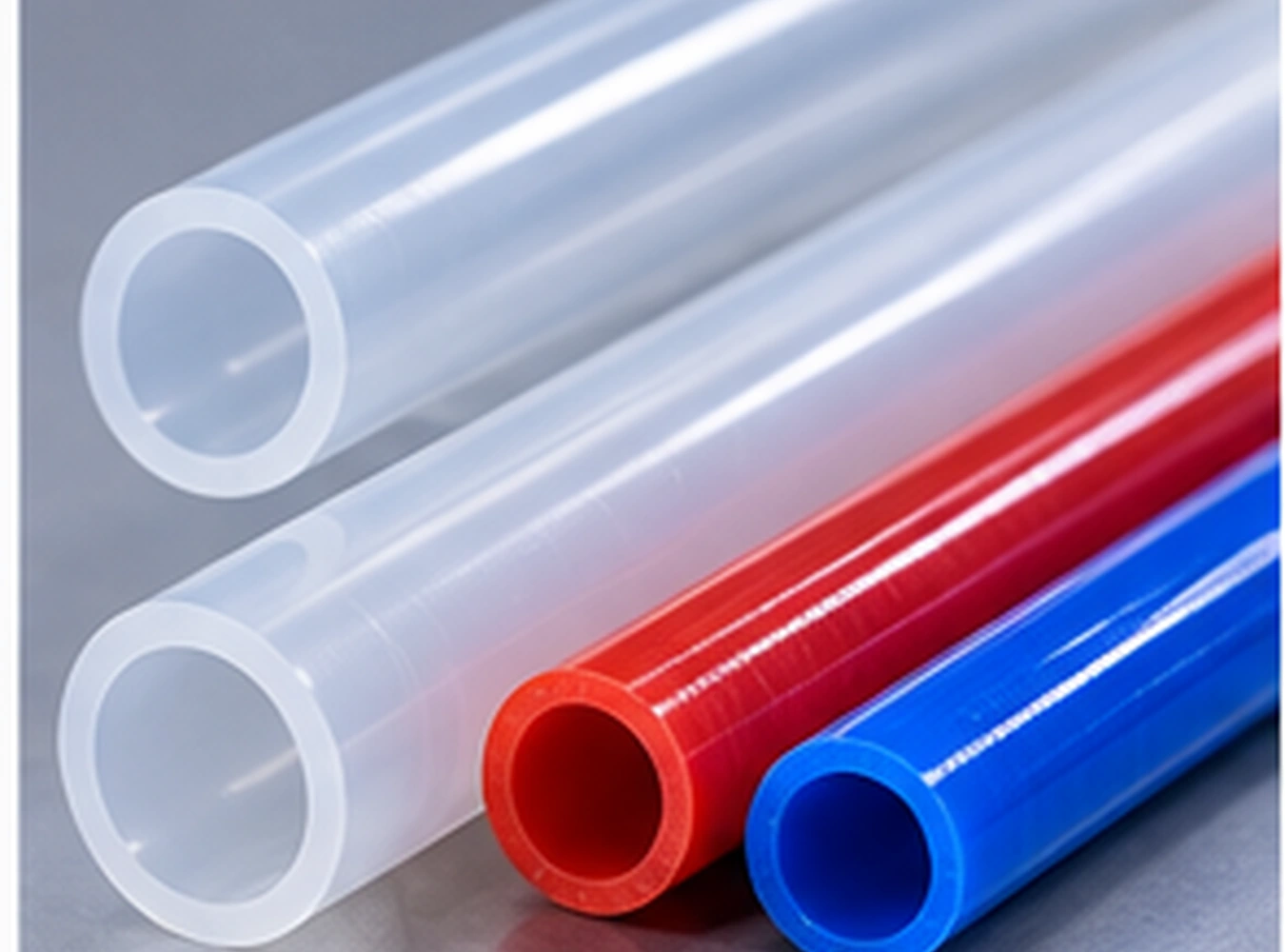
Precision silicone tubing
For straight lengths and defined IDs/ODs; dimensional control, concentricity and material grade require project review.
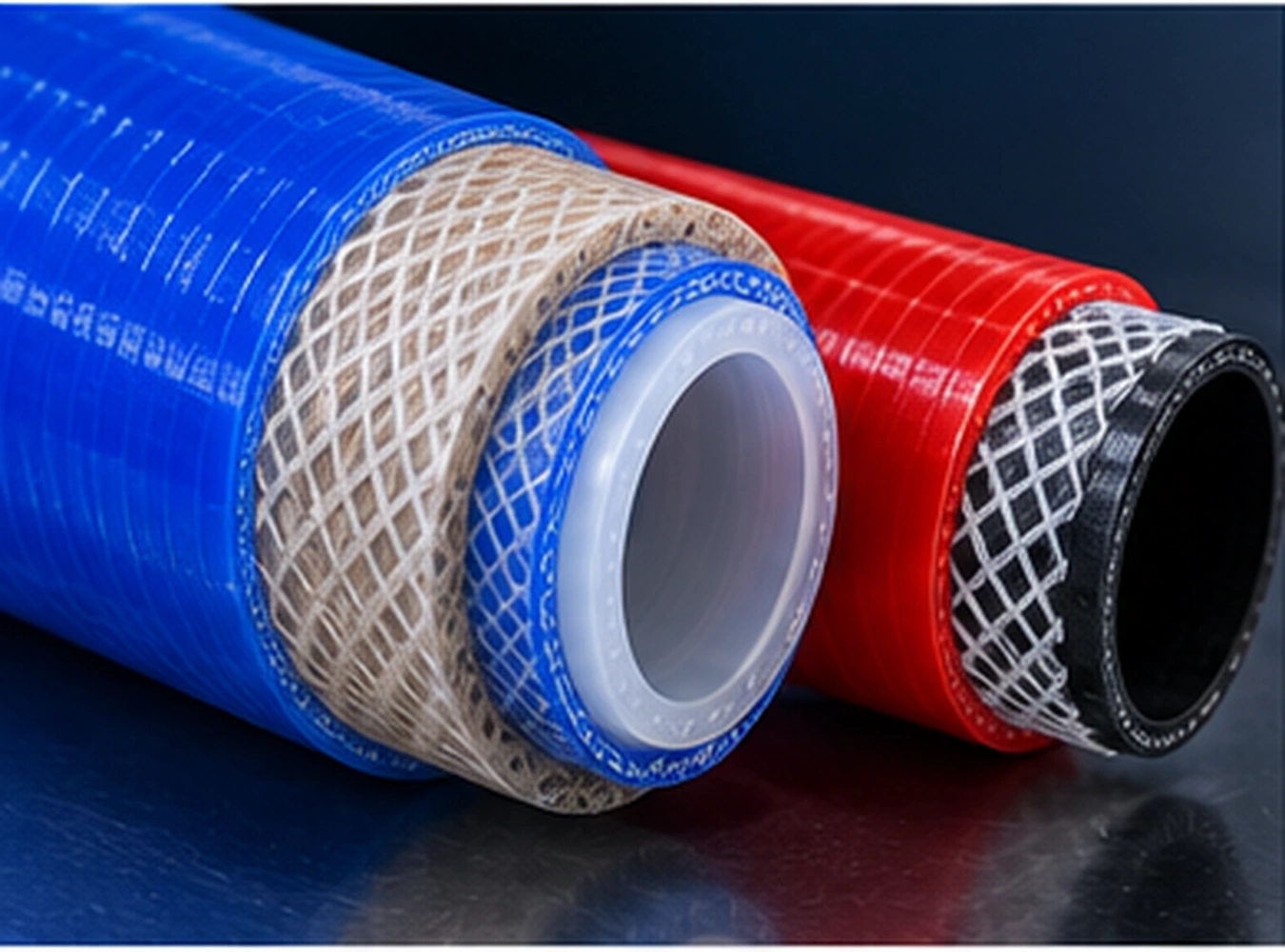
Braided reinforced hose
A construction concept to evaluate where pressure, flexibility and reinforcement compatibility are important.
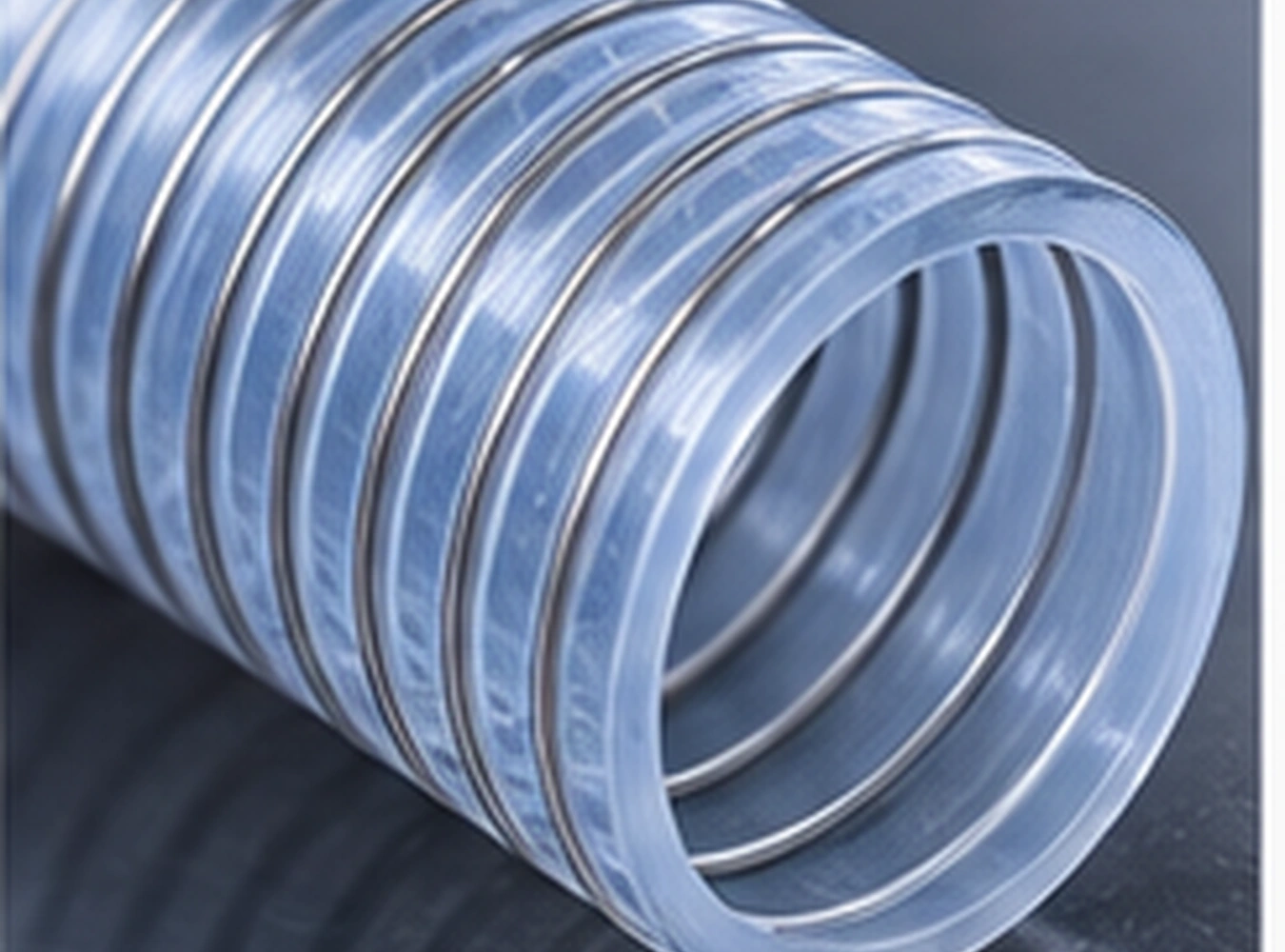
Wire-reinforced hose
A possible option for applications where collapse resistance and bending behavior must be evaluated together.
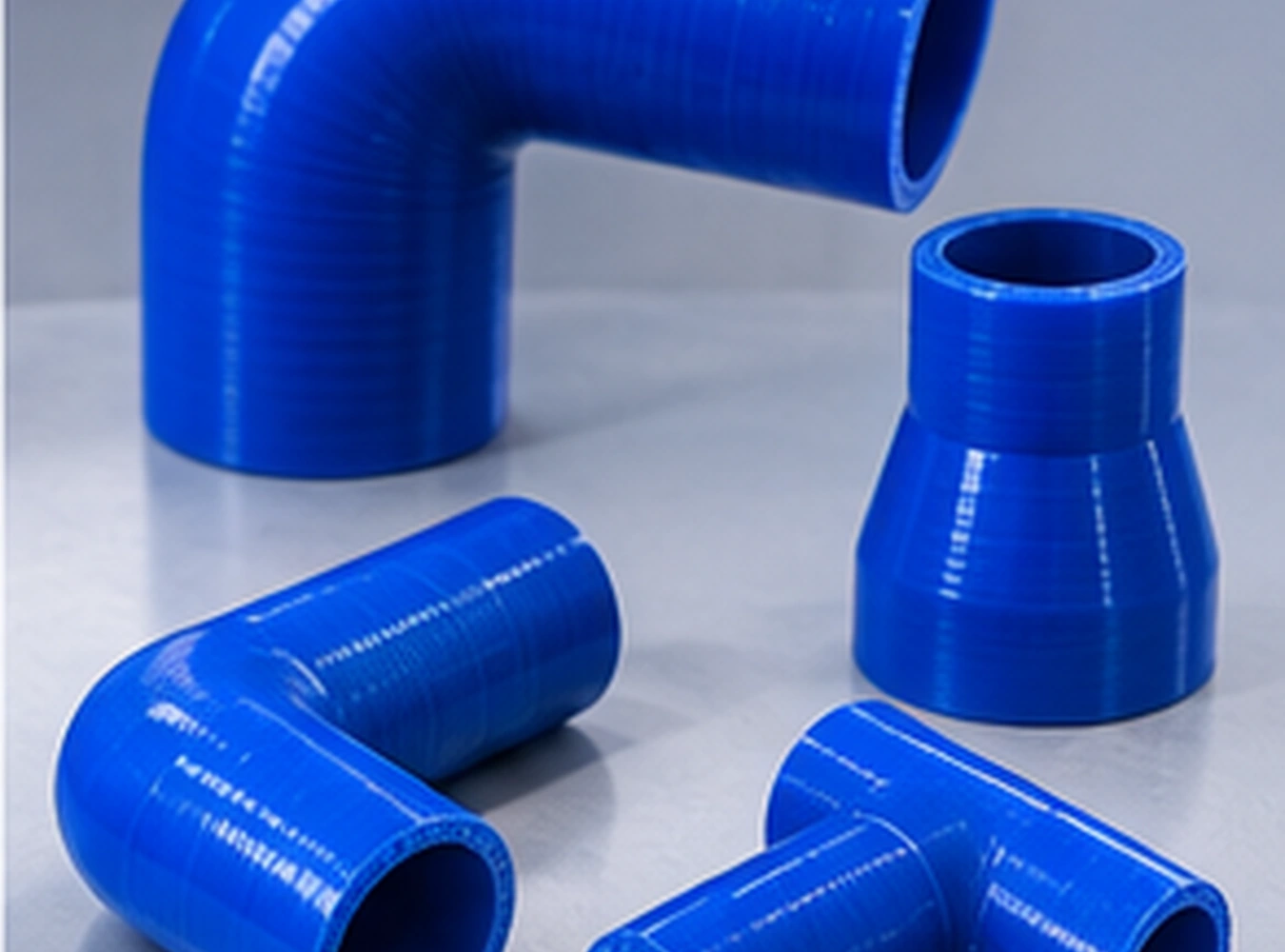
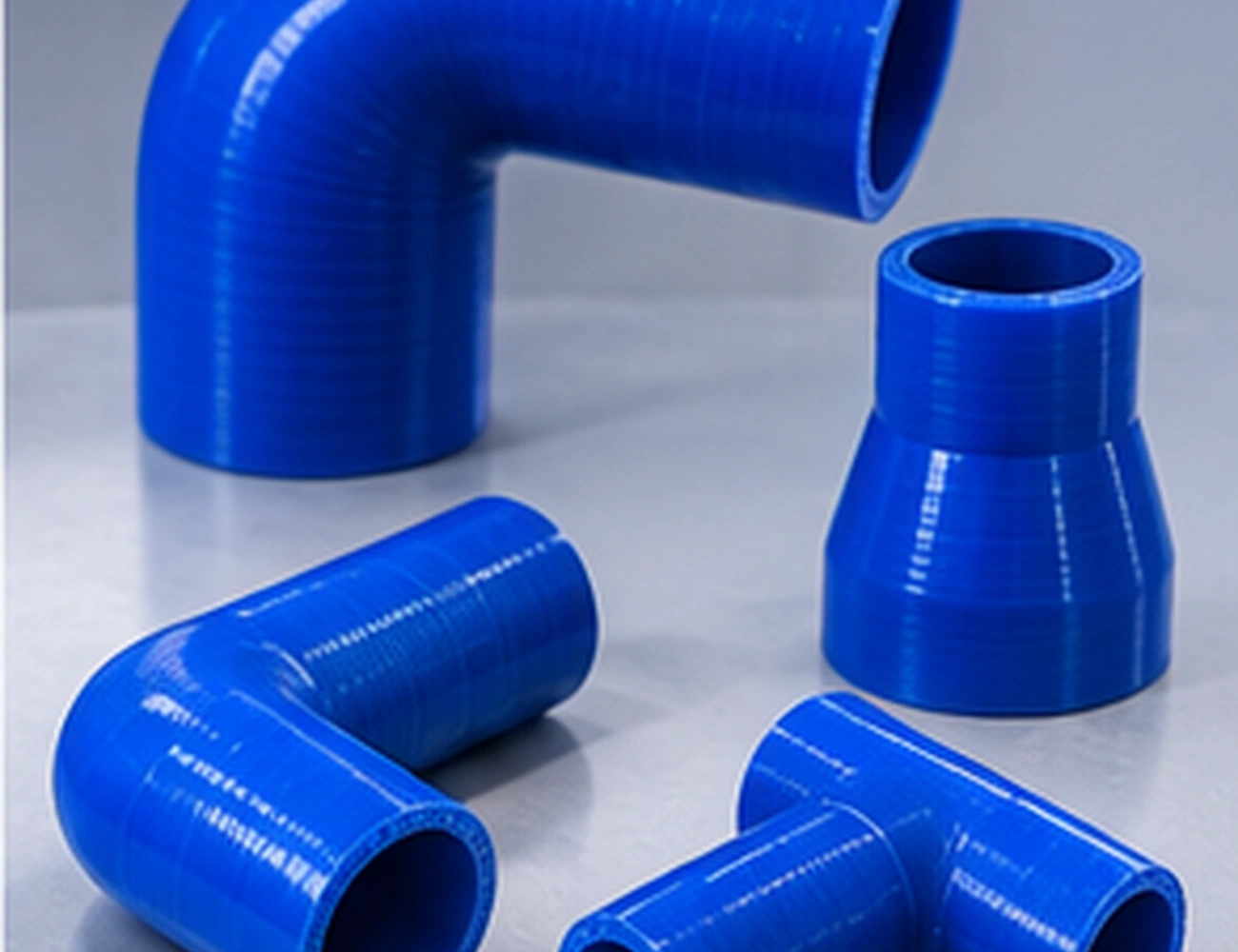
Molded elbows & transitions
Consider molded profiles when routing, bend angles or fitting interfaces make a straight extrusion impractical.
Reinforced silicone hose requires a system-level review
Braids, flexible layers and spring-wire structures can alter pressure response, bend behavior and handling. Their suitability must be established for the intended load and assembly.
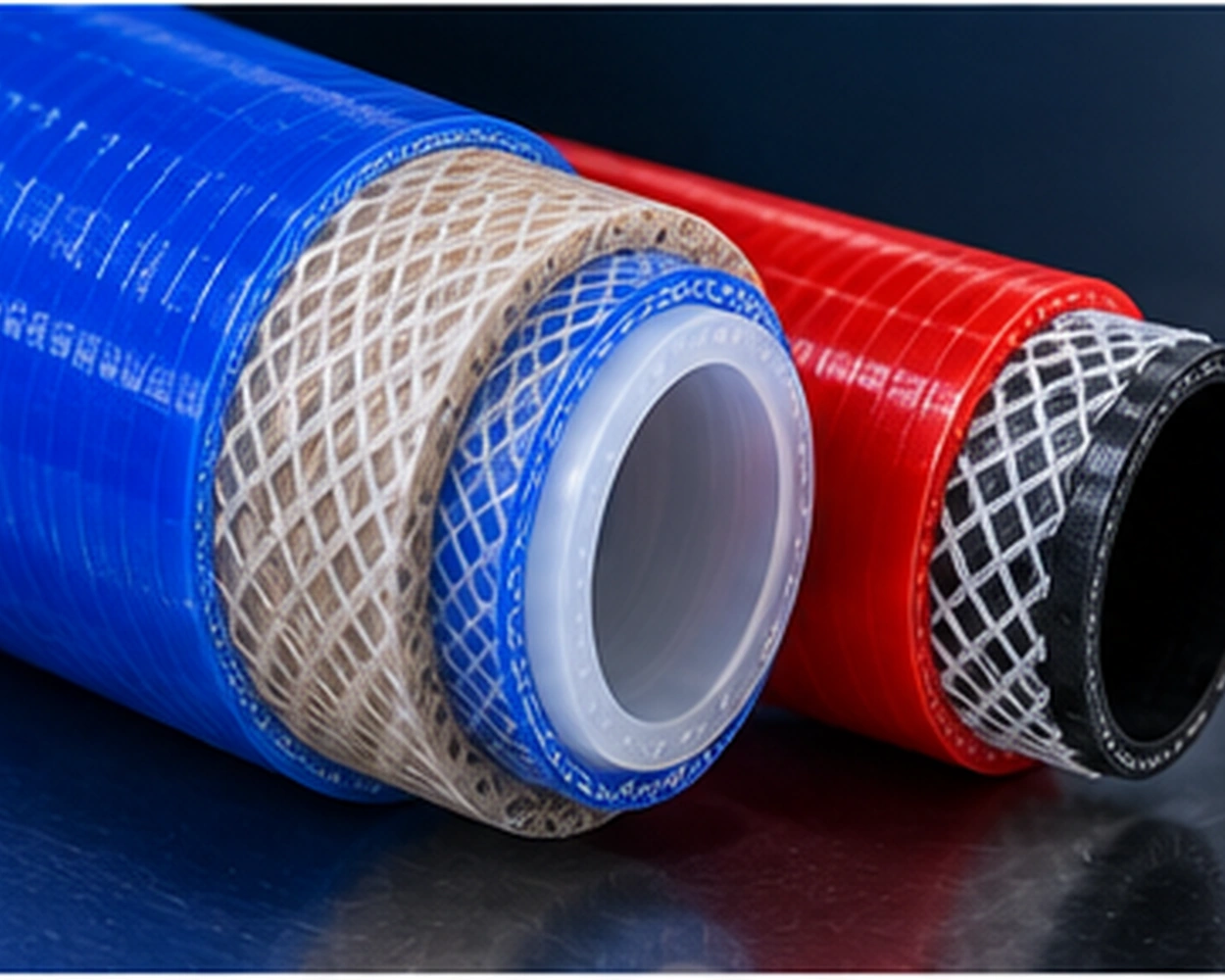
Textile reinforcement
Assess reinforcement fiber, layer arrangement and adhesion for the intended conditions.
Wire-supported construction
Review collapse resistance, corrosion exposure and flexibility targets.
Connection behavior
Specify coupling, clamp load, bend radius and sealing interfaces.
Custom molded elbows and nonstandard hose shapes
Some assemblies need elbows, offset routes, transition ends or closely controlled connection geometry. Molded silicone components can be assessed when straight lengths or conventional bending do not match the installation.
A feasibility review covers drawing geometry, parting lines, flow passages, demolding, connector fit and expected volume. Product requirements determine whether molding or another fabrication route is appropriate.
Explore silicone mold manufacturing ↗Match silicone grade to the actual media
Silicone formulations, cure systems and reinforcements do not share identical chemical or temperature limits. Confirm data and application-specific testing for the selected construction.
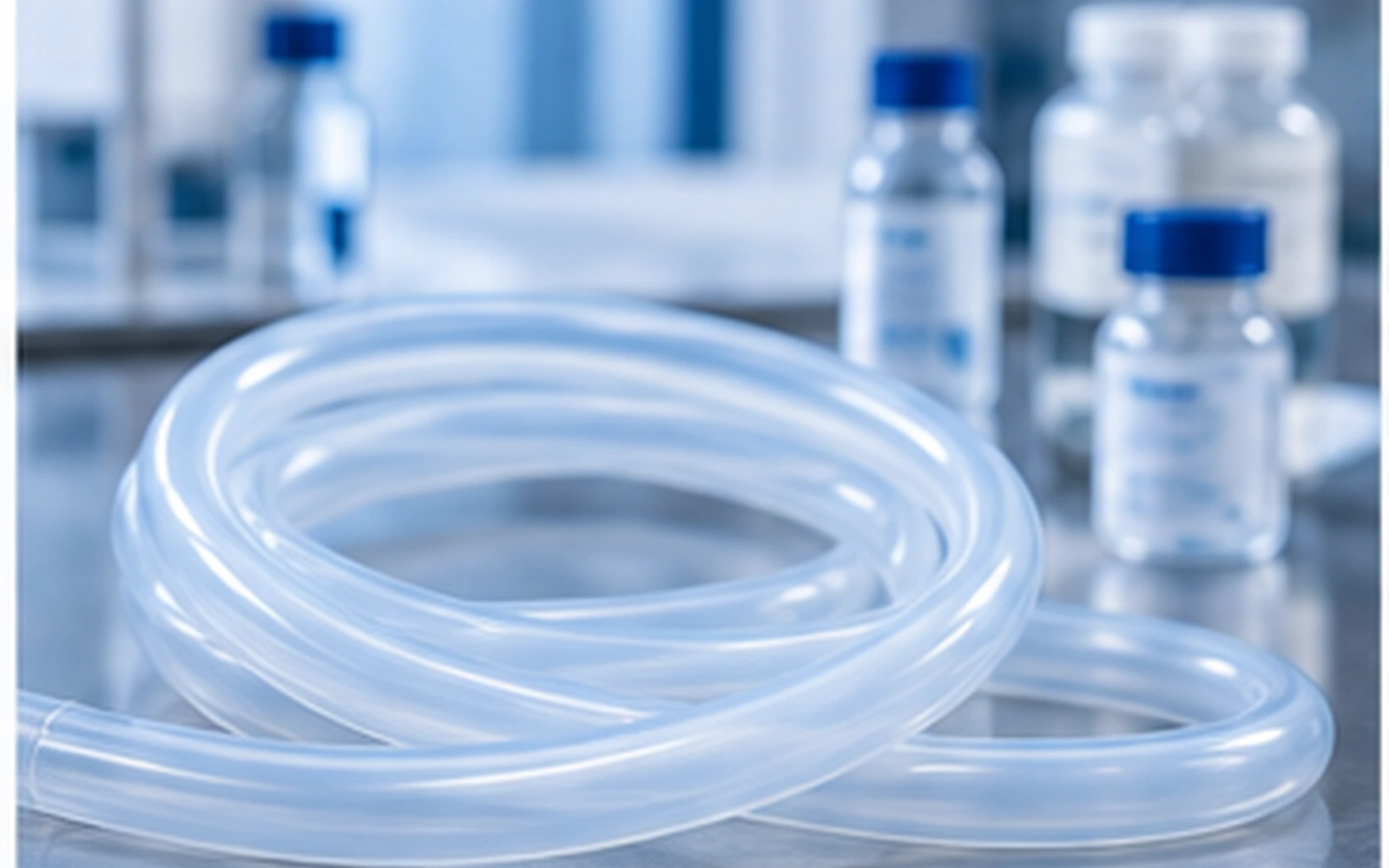
Application-specific tubing
For controlled-process or medical-device contexts, define the exact material documentation, process and intended-use requirements.
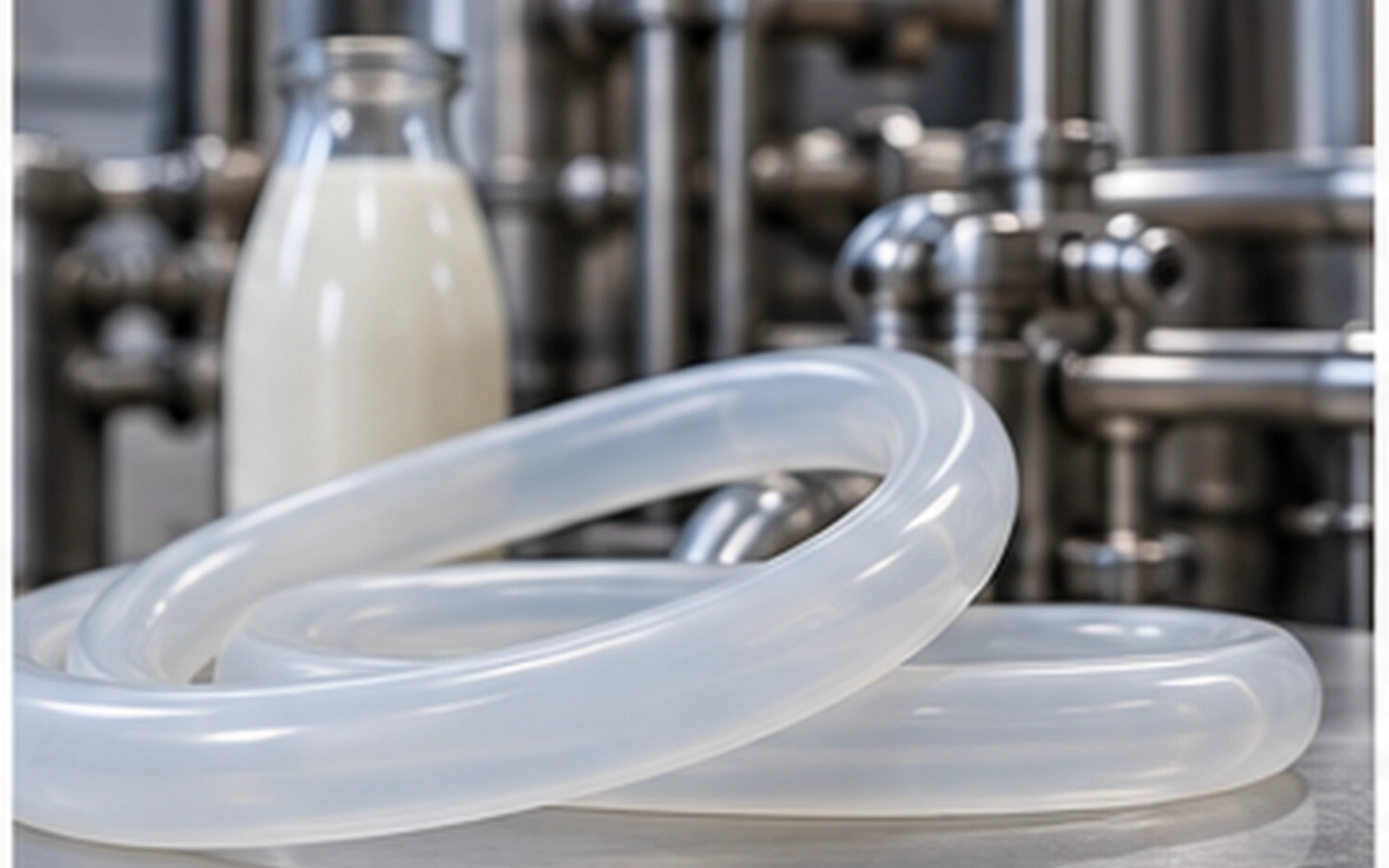
Food-contact application review
Food-contact applications require a particular approved grade, contact scenario and supporting evidence—not a blanket claim.
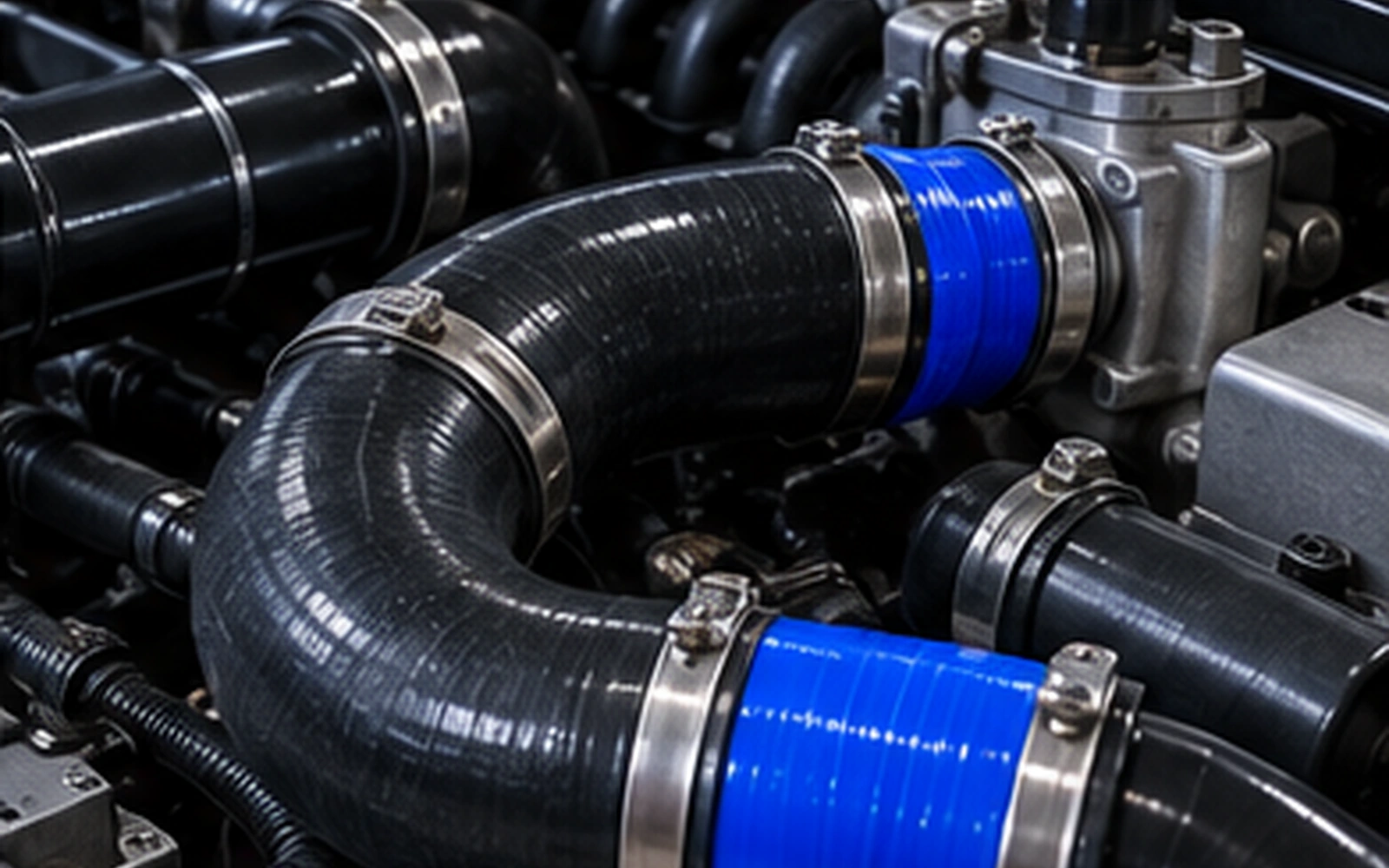
Industrial & automotive hose
Review thermal environment, media, pressure and mechanical cycling before selecting a compound or reinforcement.
Silicone hose and tubing manufacturing workflow
The steps below outline common process decisions. The final sequence is defined by the selected hose construction, machinery and material data.
Material & DFM
Review compound, nominal ID/OD, wall, exposure and manufacturing route.
Forming / extrusion
Assess suitable extrusion or molding methods for dimensions and required geometry.
Reinforcement
Where specified, consider braid, wire support and compatible covering steps.
Finishing & cure
Evaluate curing, post-curing, cutting and any required secondary operations.
Inspection & approval
Check agreed dimensional, visual and performance requirements against samples.
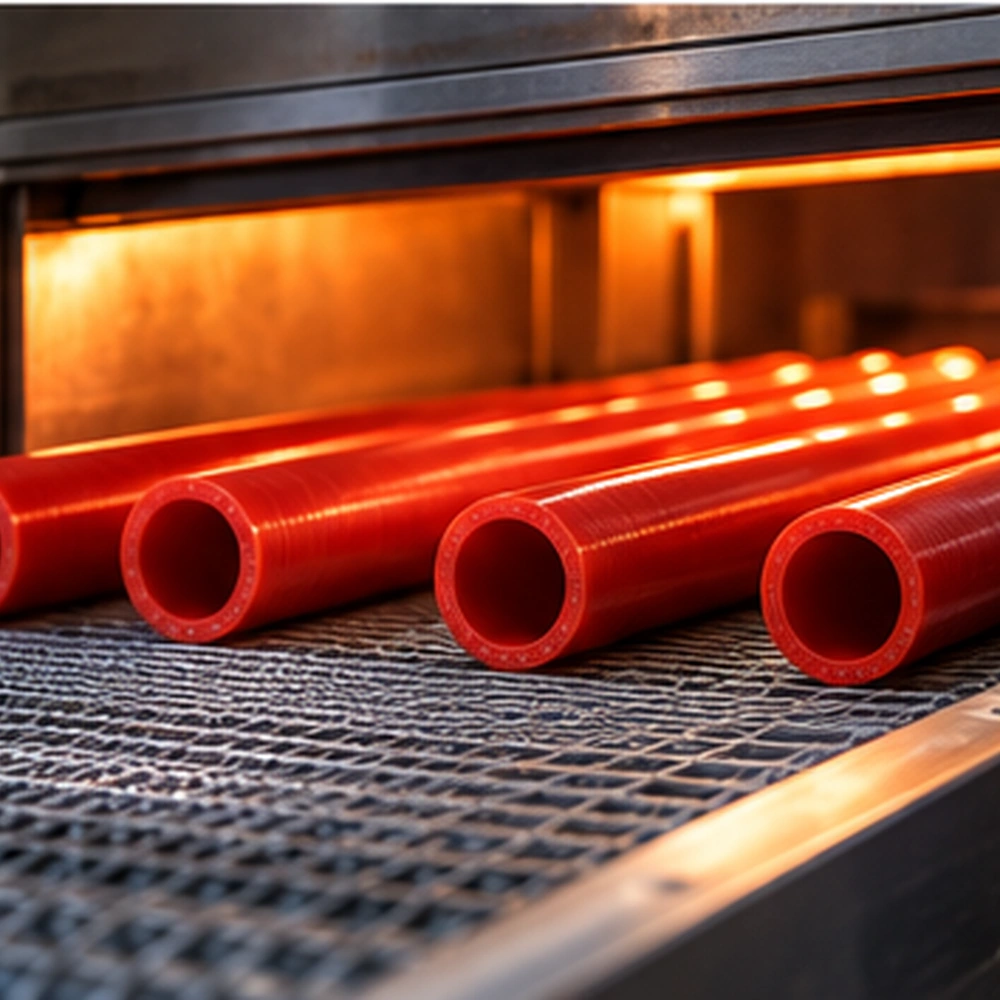
Illustrative process image: route and process parameters are chosen for each design.
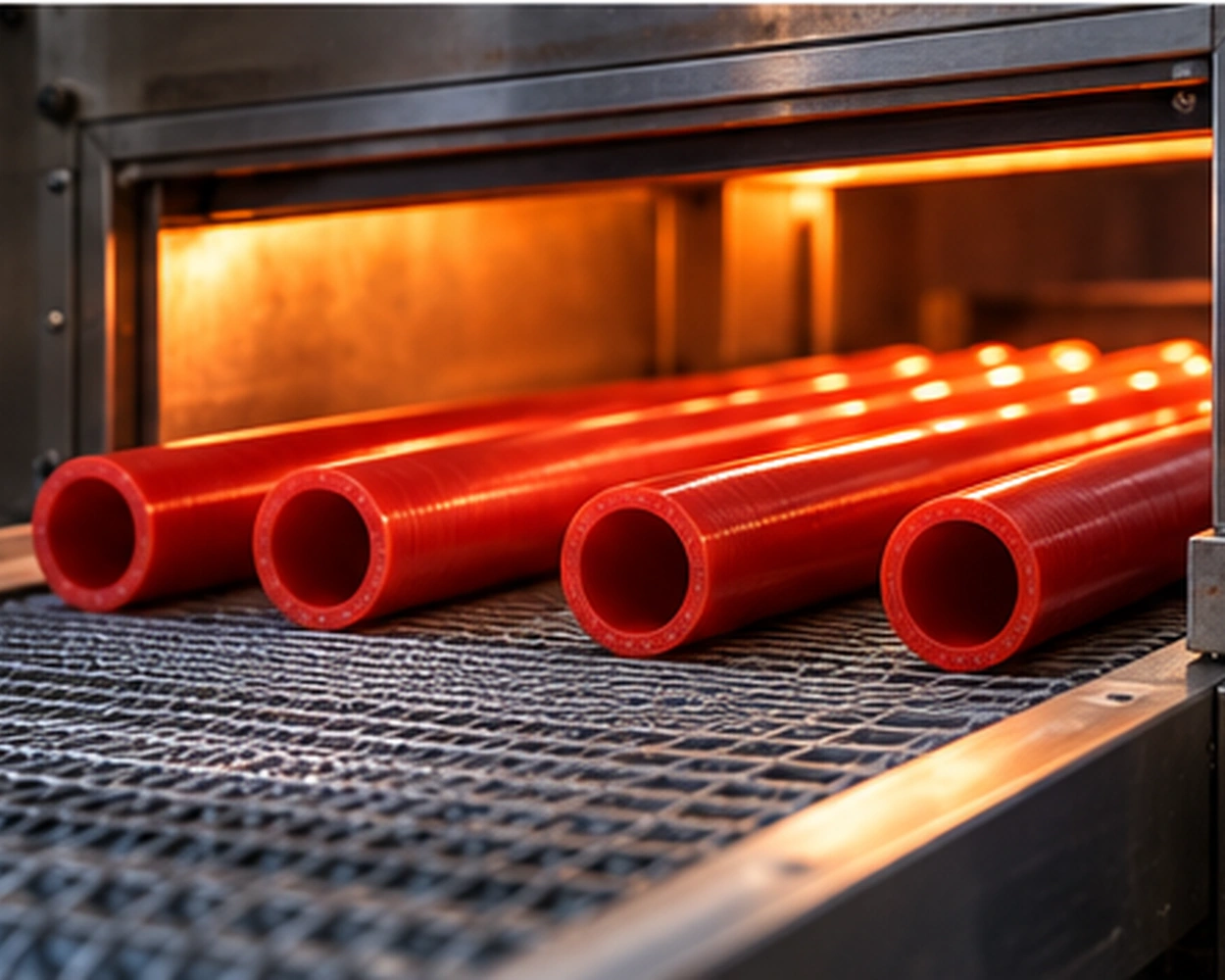
Post-curing and finishing when required
Depending on the silicone formulation and end-use requirements, post-curing may be evaluated to manage residual volatiles and to achieve material-specific properties.
Post-cure conditions are not universal: they must follow suitable technical guidance and the relevant part and material requirements.
- Assess cure and post-cure requirements for the selected material
- Specify cut-to-length and connection-end tolerances
- Plan cleaning, marking and packaging only where required
- Agree evidence of process and material conformity
Define hose acceptance from the application
Inspection and testing should correspond to the pressure regime, material, assembly interface, dimensional needs and expected service conditions.
Dimensional & material control
- Inside / outside diameter, wall distribution and concentricity
- Cut length, shape, bend constraints and end geometry
- Material hardness and relevant physical properties
- Drawing revision, batch identity or traceability when specified
Functional qualification
- Application-specific pressure or vacuum performance
- Leakage, connection integrity and possible burst testing
- Flexibility, bend response and fatigue where relevant
- Environmental exposure and required material documentation
These are candidate tests. Availability, applicable methods and pass/fail limits must be agreed for each project; no universal test certification or pressure rating is implied.
What we need for a silicone tubing RFQ
Provide a drawing or sample and operating context. Early specification reduces uncertainty around materials, tooling and the likely manufacturing method.
- Drawing / sample or CAD model
- Inside diameter, outside diameter and wall
- Length, bends and connector geometry
- Pressure, vacuum and pulsation
- Media, temperature and cleaning exposure
- Reinforcement and compound preferences
- Test / qualification requirements
- Prototype and expected annual volume
Custom silicone hose and tubing questions
Common engineering and quotation considerations for silicone hose development.
Can you review both straight silicone tubing and molded elbows?+
Yes. Provide a drawing or sample with connector and installation constraints. The manufacturing route needs a feasibility assessment for the particular geometry.
How is reinforced silicone hose different from plain tubing?+
Reinforced constructions can include braid or wire for selected service conditions. Their pressure, vacuum and bend properties must be validated for the exact reinforcement architecture.
Is all silicone tubing suitable for food or medical use?+
No. Suitability depends on the selected grade, intended contact, cleaning method, process and the specific documentation or qualification required.
How do I specify silicone tubing dimensions?+
Provide at least inside diameter, outside diameter or wall thickness, cut length and dimensional tolerances. Include bend or connection geometry where relevant.
What temperature and pressure limits apply to silicone hoses?+
No single limit applies to all silicone compounds or reinforced configurations. Supply the working conditions so the selected material and design can be evaluated.
Can I request cut-to-length or custom ends?+
Include the cut length, end drawing and tolerance requirements in your RFQ. Feasibility and finishing options can then be assessed.
How do we start a custom hose project?+
Send a drawing, dimensions, media exposure, operating pressure or vacuum, volume and any compliance requirements through the contact form.
Ready to discuss a silicone hose design?
Share your requirements or review related silicone seals, LSR molding and silicone parts services.
