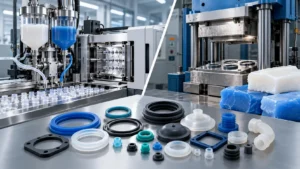
Choosing between silicone compression molding and silicone injection molding is not simply a matter of selecting the fastest machine. Material consistency, part geometry, tooling budget, expected production volume, tolerances, and inspection requirements all affect the most suitable manufacturing route. For custom silicone parts, the right choice starts with the application rather than a generic process ranking.
What is silicone compression molding?
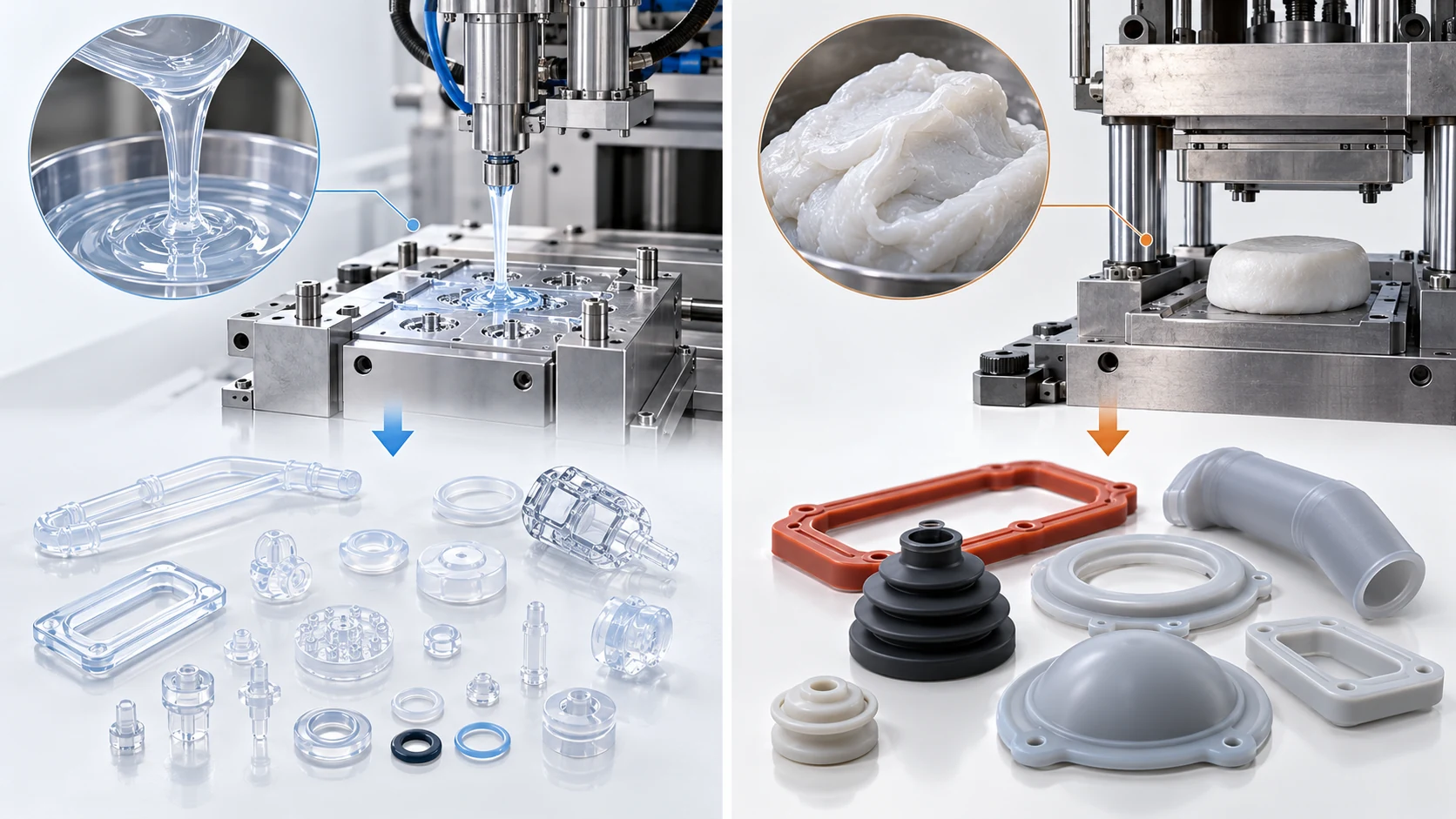
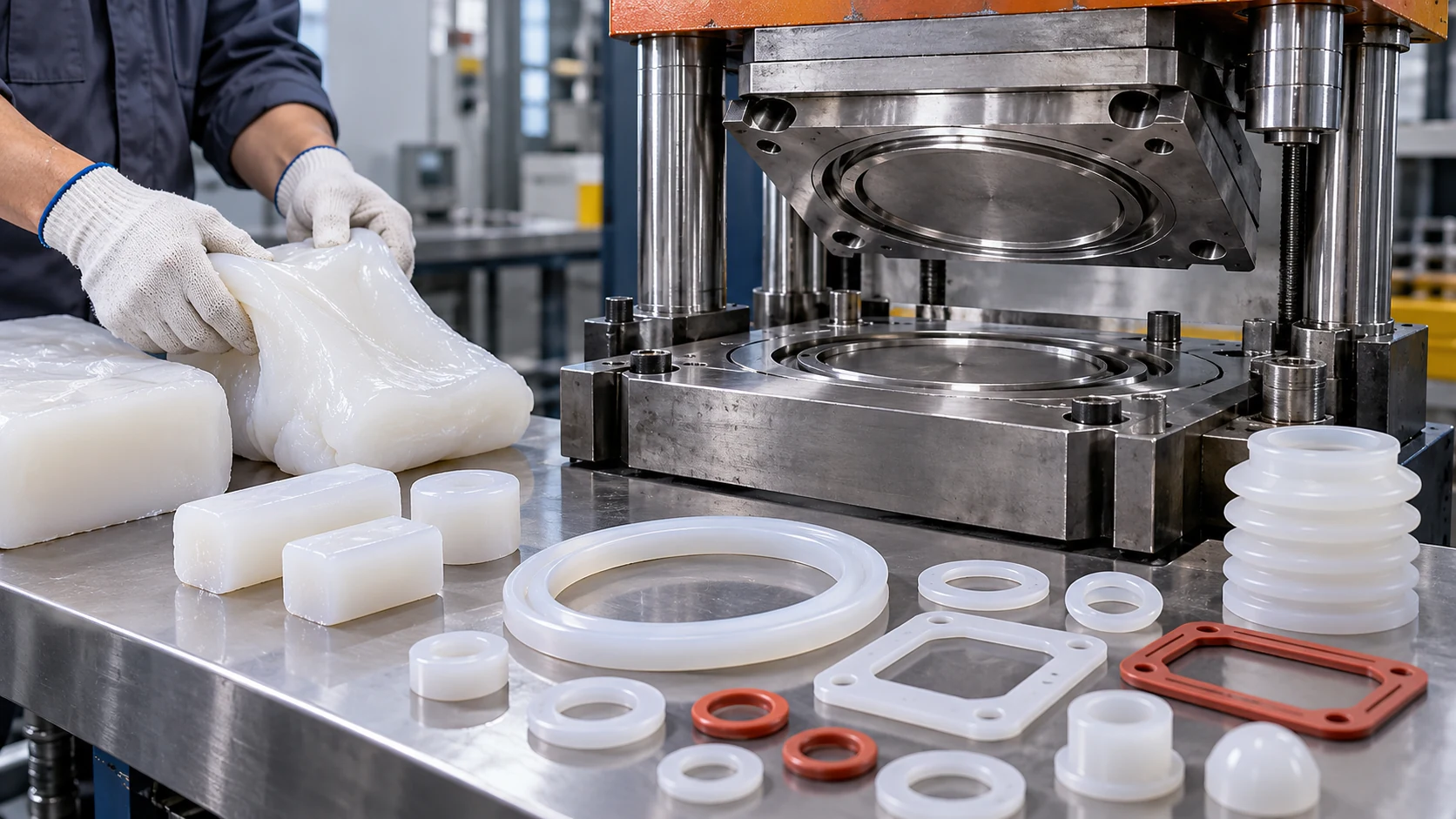
In compression molding, a measured amount of uncured silicone rubber is placed in a heated mold cavity. The mold closes under pressure, the compound flows into the required geometry, and the part cures before demolding. This process is commonly associated with high-consistency rubber (HCR) and is often considered for prototypes, small-to-medium production runs, and certain relatively simple or substantial sections.
Compression molding can offer a comparatively straightforward tooling concept, although actual cost depends heavily on the mold design, parting line, number of cavities, tolerances, and finishing requirements. Flash removal and manual handling may influence piece price and consistency.
What is silicone injection molding?
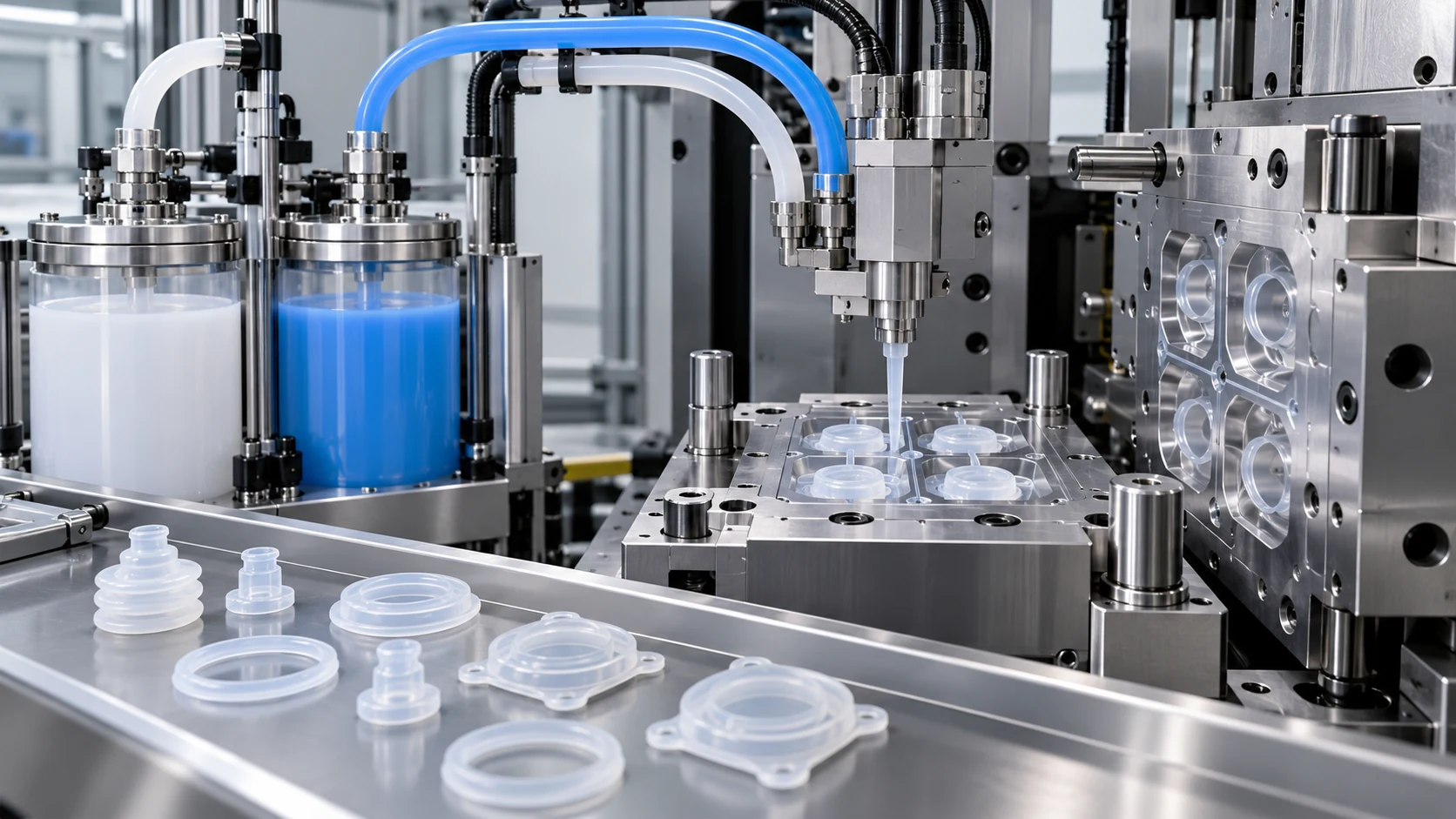
Silicone injection molding introduces a metered compound into a closed mold. Liquid silicone rubber (LSR) injection molding commonly uses a two-component, platinum-cured material system with controlled metering and mixing. Injection processes can also be used for selected high-consistency silicone formulations, so “injection molding” should not automatically be treated as synonymous with LSR.
For appropriate parts and production volumes, automated injection systems can support consistent dosing, repeatable cycles, complex cavities, and multi-cavity manufacturing. However, high-specification tooling, process validation, machine setup, and maintenance may increase initial investment.
Compression molding vs injection molding: practical comparison
| Selection factor | Compression molding | Injection molding |
|---|---|---|
| Common material route | Often HCR silicone | LSR or suitable injection-grade HCR |
| Initial tooling investment | Can be lower for simpler molds | Often higher for precision and automated systems |
| Production volume | Can suit lower or variable volumes | Often attractive for high-volume repeat production |
| Complex details | Possible, but geometry may increase finishing and tool complexity | Well suited to intricate and thin-section parts when properly engineered |
| Cycle and labor | May involve more manual loading and deflashing | Automation can reduce handling and improve cycle repeatability |
| Dimensional control | Depends on mold, compound, shrinkage and finishing | Can provide repeatable control with validated tooling and process |
| Cost per part | May be favorable at smaller volumes | Can become favorable as production volume rises |
Important: these are process tendencies, not guaranteed specifications. A quote must account for the actual part drawing, material grade, expected scrap, post-curing, inspection, and number of cavities.
Five factors that should determine your process
1. Part geometry and wall thickness
Complex undercuts, fine features, narrow flow paths, and thin walls may benefit from an appropriately selected injection-grade material and a well-designed mold. A simpler thick-section gasket or pad may be feasible with compression molding. Neither method is suitable for every geometry.
2. Projected annual volume
A lower tooling price does not always mean a lower lifetime project cost. For larger runs, compare the total cost of tooling, machine cycles, labor, finishing, scrap, inspection and replacements. At low volumes, a simpler mold can sometimes be more economical even if the unit cost is higher.
3. Material and curing chemistry
Material selection is not independent of the process. HCR and LSR differ in handling, viscosity and typical curing systems. Food-contact, medical, flame-retardant and chemical-resistant properties must be established for the specific grade and finished-part application, not assumed from the word “silicone.” For more detail, read our LSR vs HCR silicone comparison.
4. Tooling, tolerances and parting lines
Consider the gate position, venting, flash control, demolding, shrinkage and critical sealing surfaces. The same nominal drawing can require different mold designs depending on whether the part is molded by compression or injection. A design-for-manufacturing review should identify critical dimensions before tooling is ordered.
5. Quality and validation
For seals, diaphragms and functional parts, a visual inspection alone is not enough. Depending on the application, acceptance may include hardness, dimensions, tear strength, tensile properties, compression set and application-specific performance tests. Test methods, conditioning and acceptance criteria should be agreed before production.
Which process is better for custom silicone seals and gaskets?
There is no universal answer. For a relatively simple gasket in modest quantities, compression molding may deserve consideration. For a small, intricate seal planned for repeat high-volume production, LSR injection molding may be an attractive option. The best decision comes from comparing manufacturability and total program costs for the specific design.
Explore related services for custom silicone gaskets, custom silicone seals, and silicone mold design and tooling. If an LSR route is under consideration, see the LSR injection molding service page and confirm project-specific feasibility.
What should you send for a manufacturing review?
- 2D drawing or 3D CAD model, and sample if available
- Annual volume, batch size and expected project life
- Material specification, Shore A hardness and color
- Operating temperature, chemical exposure and relevant standards
- Critical dimensions, tolerances and functional sealing requirements
- Inspection requirements and target lead time
Send the details through TEMCO Rubber’s contact page to discuss a suitable manufacturing approach. Capabilities, material availability, costs and lead times should be confirmed during project review.
Frequently asked questions
Is compression molding always cheaper than injection molding?
No. Compression tooling may be more economical for simple low-volume programs, while injection molding can offer lower per-part costs in suitable high-volume programs. Compare total project costs rather than tool price alone.
Is silicone injection molding always an LSR process?
No. LSR is a common route for automated liquid silicone injection, but certain HCR silicone grades can also be injection molded.
Can both methods produce food-contact silicone parts?
Potentially, but suitability depends on the exact material grade, formulation, process and finished-part compliance requirements. Neither manufacturing method automatically grants food-contact approval.
Which method gives tighter tolerances?
Tolerances depend on the drawing, compound, mold design, shrinkage and validated process. Injection molding can support strong repeatability in suitable applications, but no tolerance should be promised without a specific engineering assessment.
Technical references
General process principles were cross-checked against WACKER’s Solid and Liquid Silicone Rubber: Material and Processing Guidelines (edition 10.25), including its discussion of compression molding, liquid injection molding, material properties and processing benefits, and the Silicone Elastomers 2012 conference proceedings (Smithers). These sources describe general technology; they do not verify an individual manufacturer’s equipment or certification.