
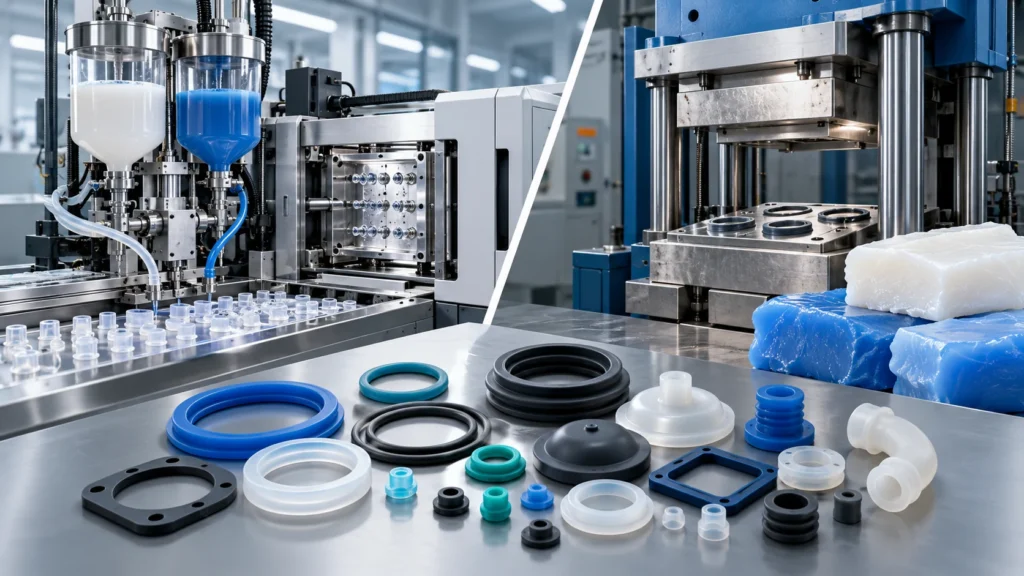
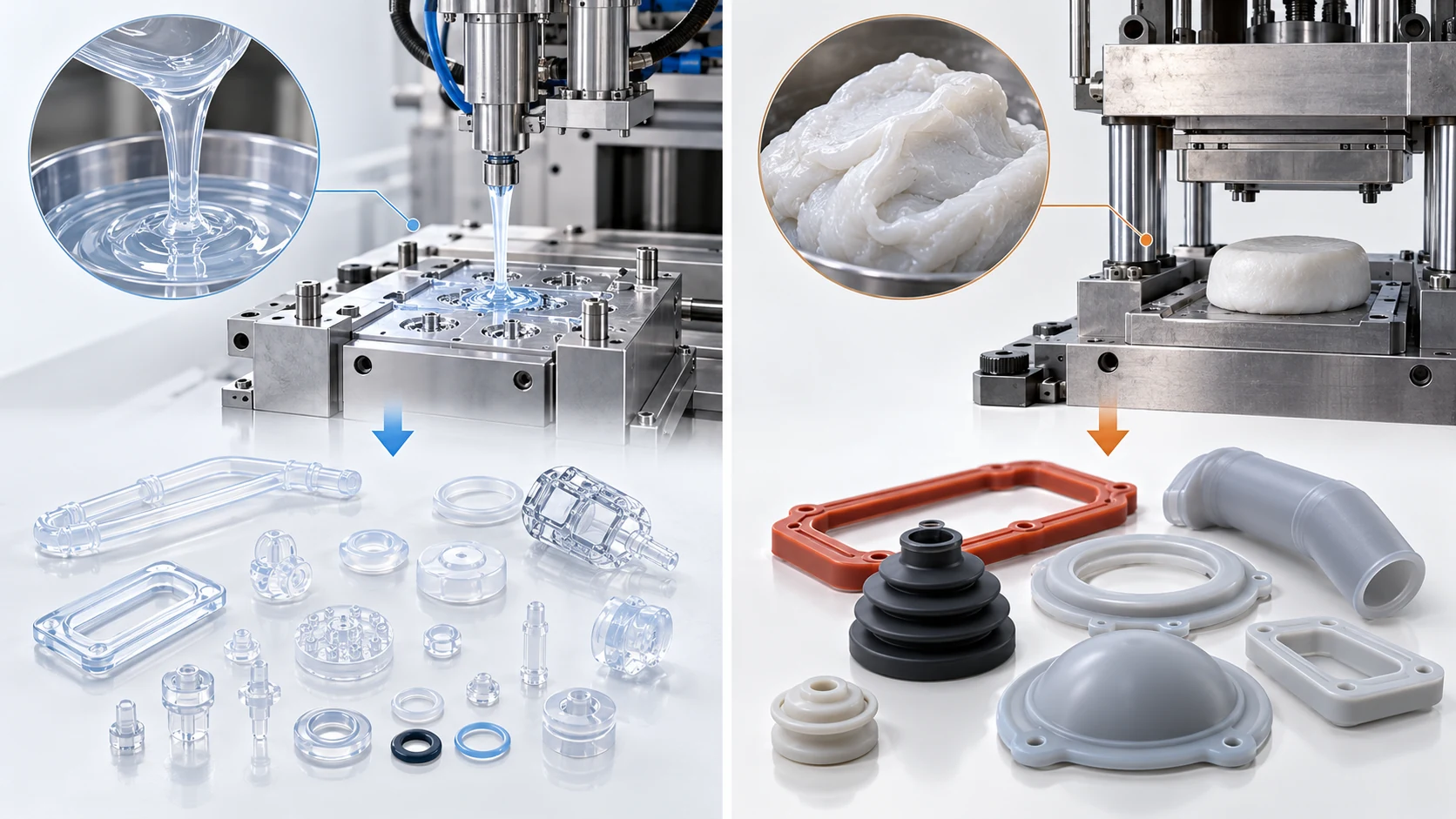
Choosing between LSR and HCR silicone is not simply a matter of deciding whether liquid or solid silicone is “better.” Both belong to the silicone elastomer family, and both can be engineered into high-performance molded components such as seals, gaskets, diaphragms, O-rings, bellows and other technical parts.
The major difference appears before and during manufacturing. Liquid Silicone Rubber (LSR) and High Consistency Rubber (HCR) have very different uncured forms, flow behavior, material-handling requirements, curing systems and production economics.
For an OEM project, the correct choice should therefore be based on the complete manufacturing system: part geometry, silicone grade, annual volume, tooling strategy, dimensional requirements, required automation and the final operating environment.
This guide compares LSR vs HCR silicone from a practical manufacturing perspective and explains how each material can influence mold design, processing and finished-part performance.
What Is HCR Silicone?
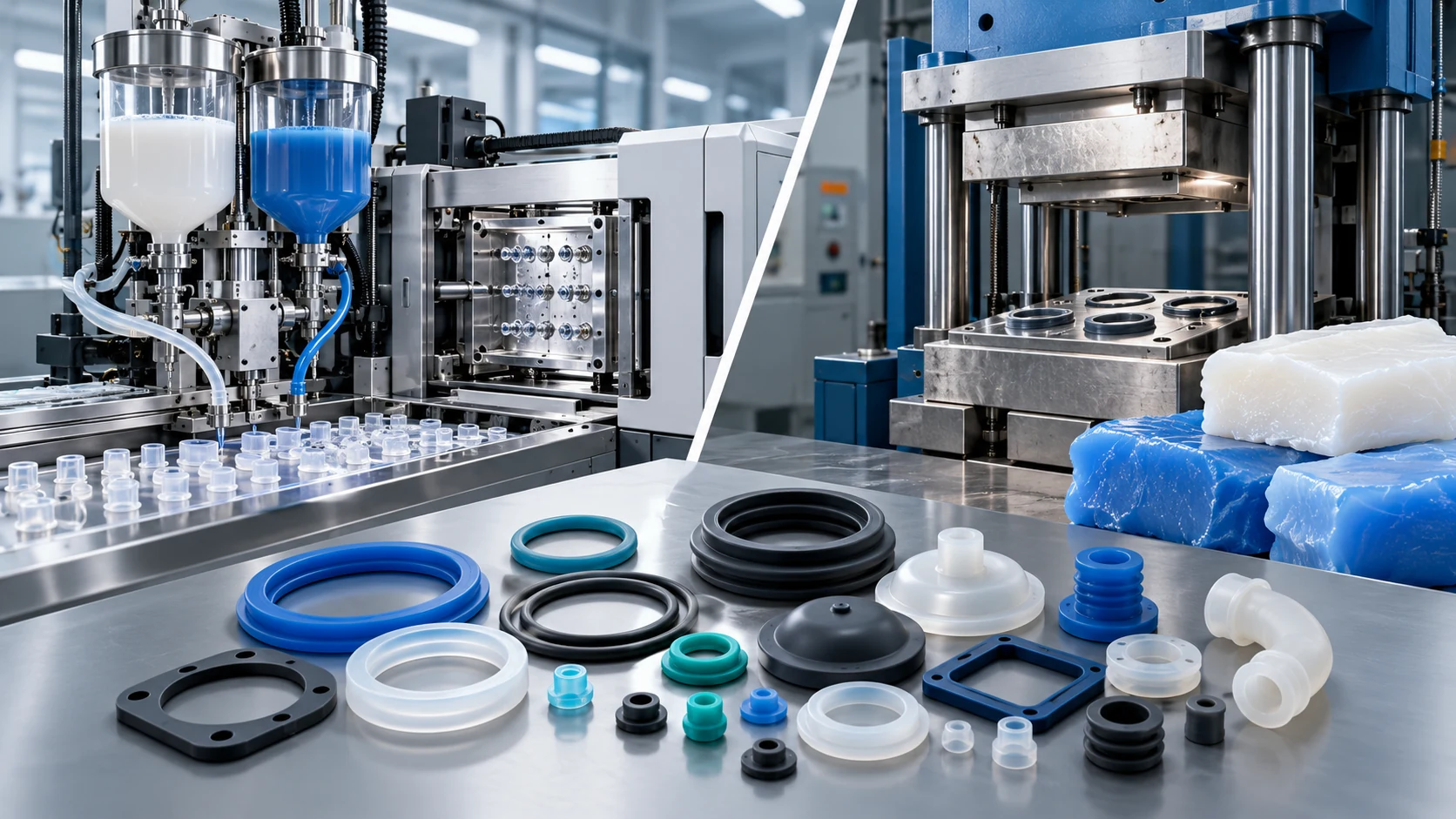
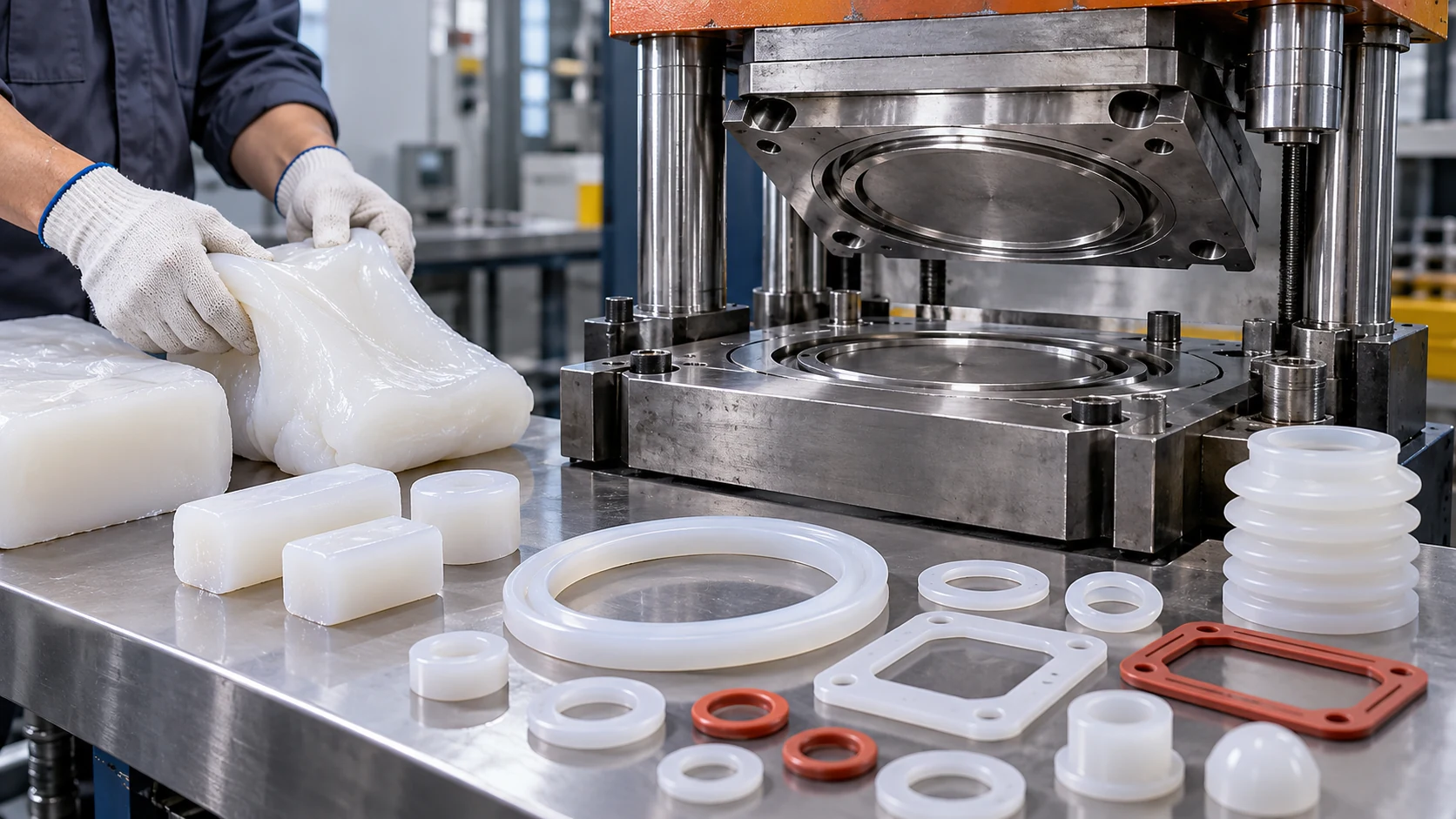
HCR stands for High Consistency Rubber. It is commonly described as solid silicone rubber because the uncured compound has a firm, gum-like consistency rather than behaving like a pumpable liquid.
HCR generally contains high-molecular-weight silicone polymers with relatively long polymer chains. This high consistency allows the compound to be supplied in forms such as bars, strips, cords, pellets or prepared preforms.
Depending on the silicone grade, HCR may use peroxide curing or platinum-catalyzed addition curing. This distinction is important because HCR should not automatically be treated as a peroxide-only material.
One of HCR’s most important advantages is processing flexibility. Solid silicone rubber can be manufactured using several methods, including:
- Compression molding
- Transfer molding
- Solid-silicone injection molding
- Extrusion
- Calendering
This makes HCR useful across a wide range of industrial projects, from molded seals and gaskets to hoses, profiles and other extruded silicone components.
What Is LSR Silicone?
LSR stands for Liquid Silicone Rubber. Although the cured material is still a silicone elastomer, its uncured state is very different from HCR.
LSR uses lower-molecular-weight polymers and shorter chains, giving it substantially lower viscosity and better flow characteristics.
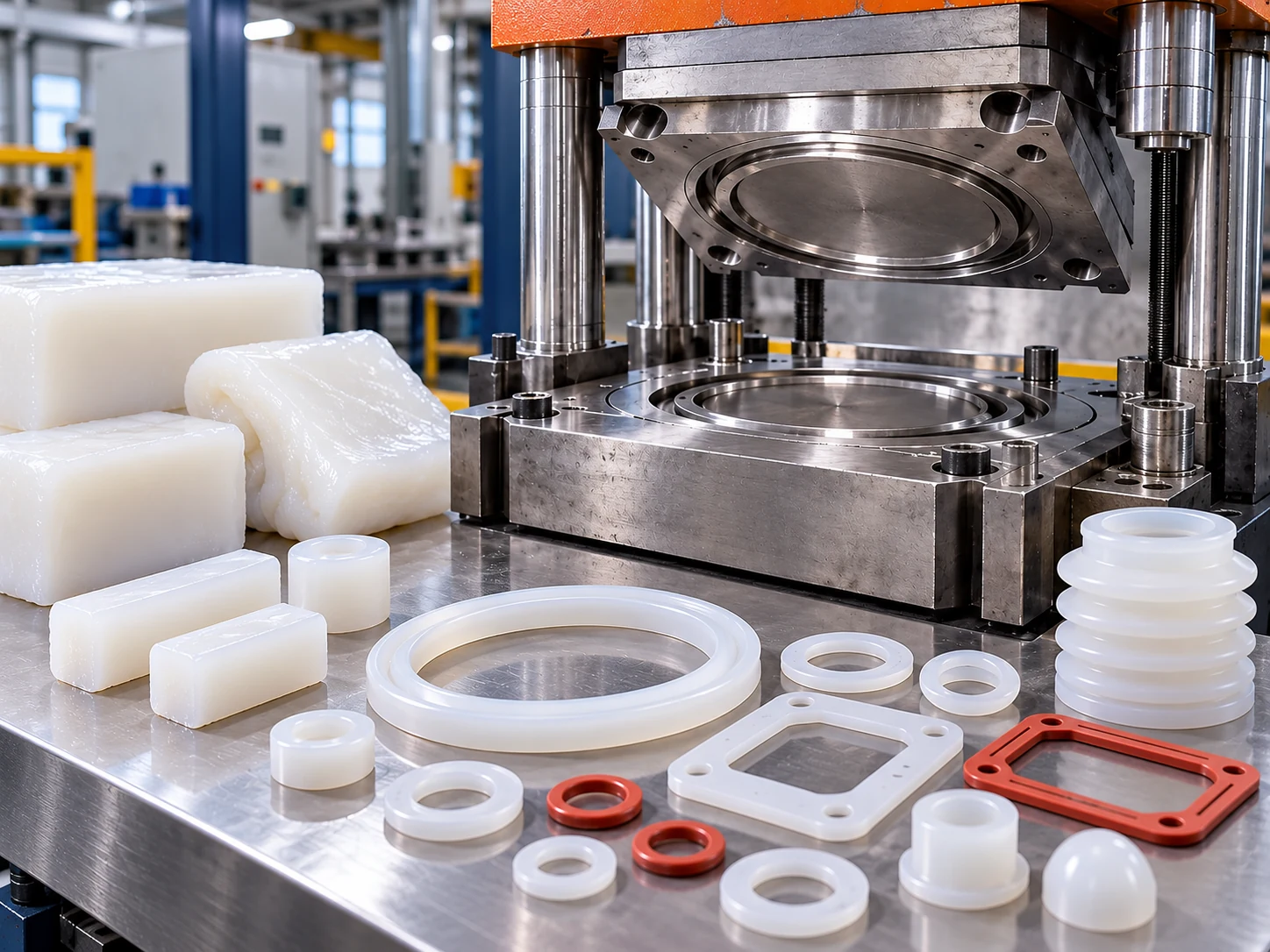
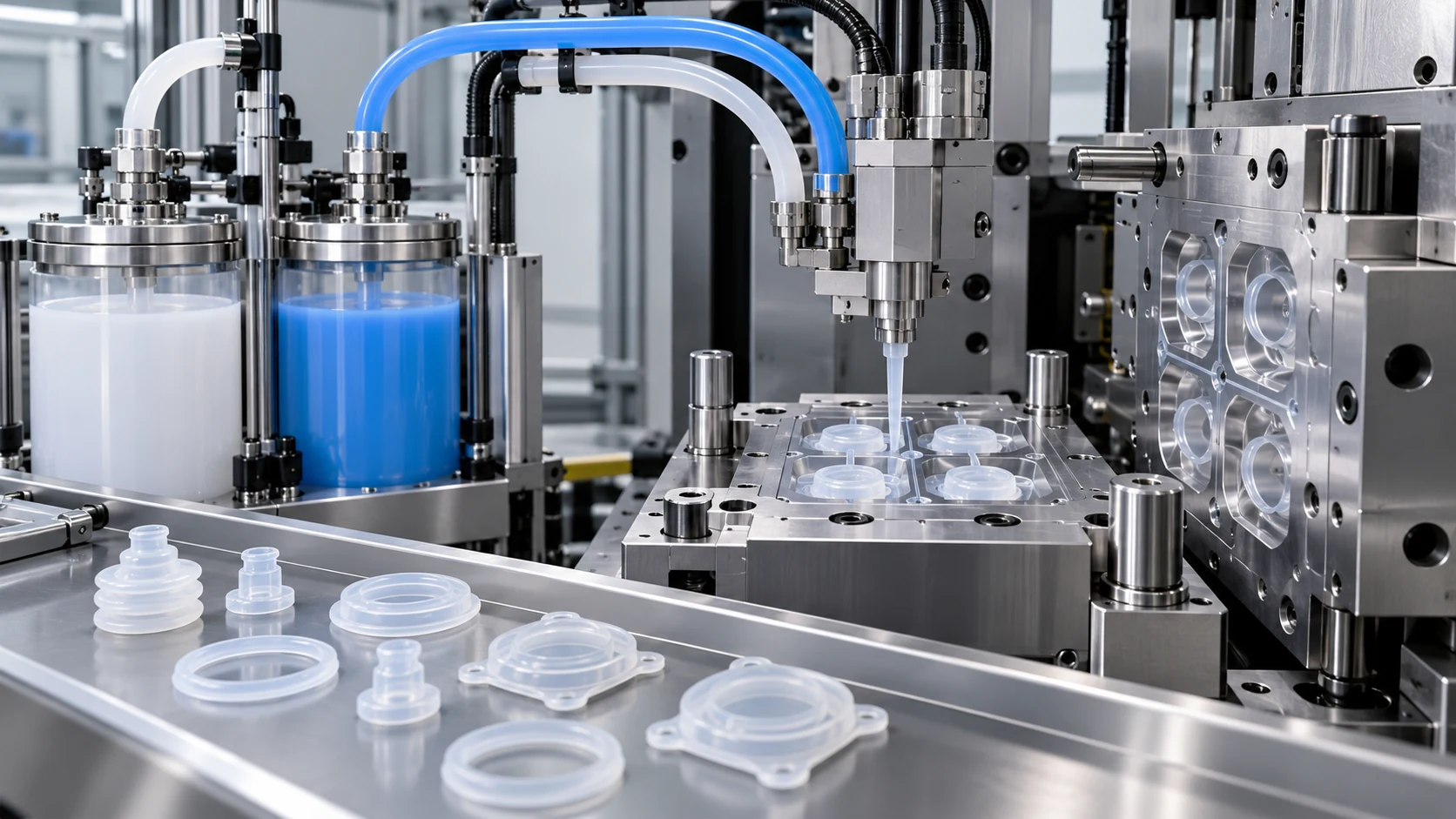
Commercial LSR is typically supplied as a two-component system. Part A and Part B are pumped from separate containers, accurately metered, mixed and then delivered to the injection unit.
The system is normally platinum-catalyzed. Once the mixed silicone enters the heated mold, it rapidly vulcanizes into the final elastomeric part.
This combination of low viscosity, controlled metering and rapid curing gives LSR strong potential for automation, complex geometries and high-repeatability manufacturing.
Learn more about our dedicated
LSR injection molding
capability.
LSR vs HCR Silicone: Key Differences
| Factor | LSR | HCR |
|---|---|---|
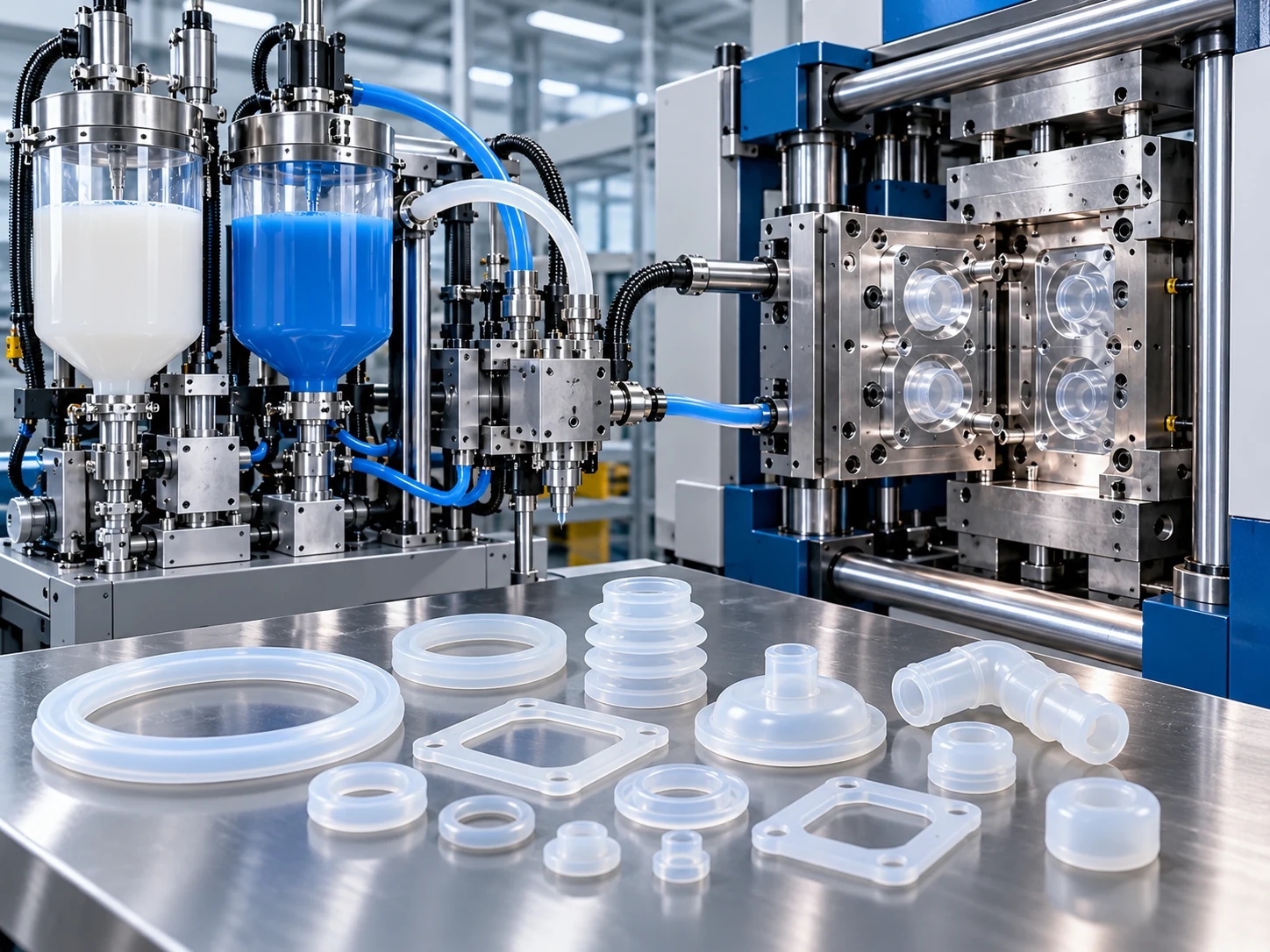
| Uncured form | Low-viscosity liquid | High-consistency solid or gum compound |
| Polymer characteristics | Lower molecular weight and shorter chains | Higher molecular weight and longer chains |
| Material supply | Typically two-component A/B system | Bars, strips, cords, pellets or prepared compounds |
| Typical cure system | Platinum-catalyzed addition curing | Peroxide or platinum-catalyzed curing |
| Main molding route | Liquid injection molding | Compression, transfer or solid-silicone injection molding |
| Flow behavior | Excellent flow into thin and complex geometry | Higher viscosity; flow is more dependent on pressure and mold design |
| Automation potential | Very high | Depends on process and component |
| Tooling | Often more sophisticated injection and cold-runner tooling | Compression molds can be simpler for suitable geometries |
| Production strategy | Repeat, automated and high-volume production | Flexible from smaller series through repeat production |
HCR Is More Than Compression Molding
A common simplification is to say that LSR means injection molding while HCR means compression molding. That is useful for a basic comparison, but it is not technically complete.
HCR can also be processed by injection molding, transfer molding, extrusion and calendering. The major difference is that a high-consistency compound requires a different feeding and material-handling strategy than a pumpable LSR system.
This processing flexibility explains why HCR remains important for industrial manufacturers. A single family of solid silicone compounds can potentially support molded parts, profiles, tubing and other product types.
Commercial solid-silicone families also include specialized grades for:
- General molding
- High tear strength
- High rebound
- Food contact
- High-temperature service
- Electrical applications
- Flame resistance
- Extrusion
How HCR Compression Molding Works
Compression molding is one of the most established methods for producing HCR silicone components.
A controlled quantity of uncured silicone is prepared as a preform and placed into or near the mold cavity. The heated mold closes under pressure, causing the compound to flow and fill the available geometry.
The silicone then cures under heat and pressure before the mold opens and the finished component is removed.
For many solid silicone grades, mold temperatures in the range of approximately 150–200°C may be used, although the correct conditions depend on the selected compound, cure system, part thickness and mold configuration.
Process temperature must be carefully controlled. Increasing temperature can shorten vulcanization time, but excessive temperature may initiate curing before the cavity has filled completely.
Why LSR Flows Differently
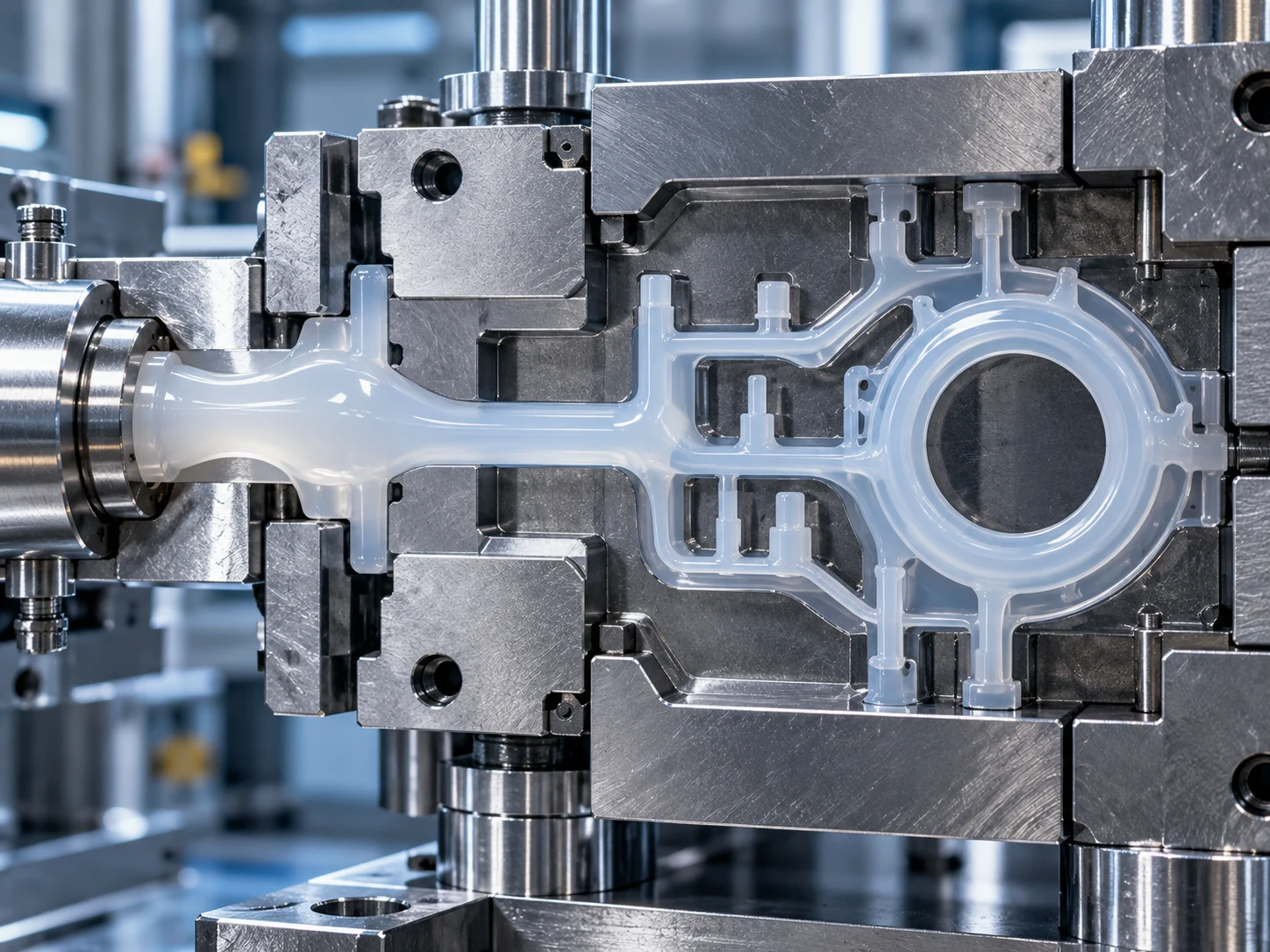
Low viscosity is one of the defining processing characteristics of LSR.
It allows the material to move through comparatively small gates and fill long, thin or intricate cavity sections. This can be particularly valuable for components where conventional high-viscosity rubber compounds would require more pressure or more difficult mold-filling strategies.
LSR systems can also exhibit shear-thinning behavior. As the material is subjected to shear during injection, its effective viscosity decreases, helping the silicone move through narrow flow paths.
This behavior can benefit parts with:
- Thin walls
- Long flow paths
- Small sealing lips
- Fine molded details
- Membranes and diaphragms
- Complex three-dimensional geometry
Automation: One of LSR’s Biggest Strengths
The LSR process can be highly automated because material preparation, metering and injection can occur within a closed production system.
The two material components can be pumped directly from drums or containers, metered at a controlled ratio and mixed automatically before entering the injection unit.
A well-designed LSR production cell may integrate:
- A/B material supply
- Accurate metering
- Automated mixing
- Pigment or additive dosing
- Injection control
- Cold-runner tooling
- Multicavity production
- Automatic demolding
- Robotic handling
- Camera inspection
As production volume increases, this automation can reduce direct labor and improve repeatability.
Does LSR Always Mean a Lower Part Cost?
No. Automation alone does not guarantee that LSR will be the most economical process.
LSR injection tooling can require precise temperature management, cold-runner systems and sophisticated gating. The molding equipment itself is also more specialized.
For high-volume programs, these investments can be offset by shorter cycle times, reduced manual labor, lower runner waste and less secondary finishing.
For a simple component produced in lower quantities, HCR compression molding may offer a lower total project cost.
The correct question is therefore not simply:
Which silicone material is cheaper?
Instead, the manufacturer should determine which combination of material, tooling and production process delivers the required quality at the best total cost over the expected life of the program.
Cycle Time and Cure Chemistry
Cure chemistry has a direct effect on manufacturing.
LSR normally uses platinum-catalyzed addition curing. Once the mixed material reaches the heated mold, cure can occur rapidly.
Platinum curing also avoids the peroxide decomposition by-products associated with traditional peroxide systems.
HCR offers more flexibility because commercial grades may be peroxide-cured or platinum-catalyzed.
This means engineers should not compare LSR and HCR using material names alone. The exact compound and cure system should always be reviewed.
Platinum systems also require attention to contamination. Certain sulfur- or amine-containing compounds and other catalyst poisons can interfere with curing, so production cleanliness and material segregation may become important process controls.
Part Geometry Can Be More Important Than Production Volume
Annual production volume is important, but the part geometry itself may determine the manufacturing route before quantity does.
For example, a component with very thin walls, narrow sealing features or extremely long flow paths may be difficult to fill with a high-consistency material even at moderate production volume.
Conversely, a relatively simple part may remain highly competitive in HCR even at significant quantities if the molding process is stable and sufficiently efficient.
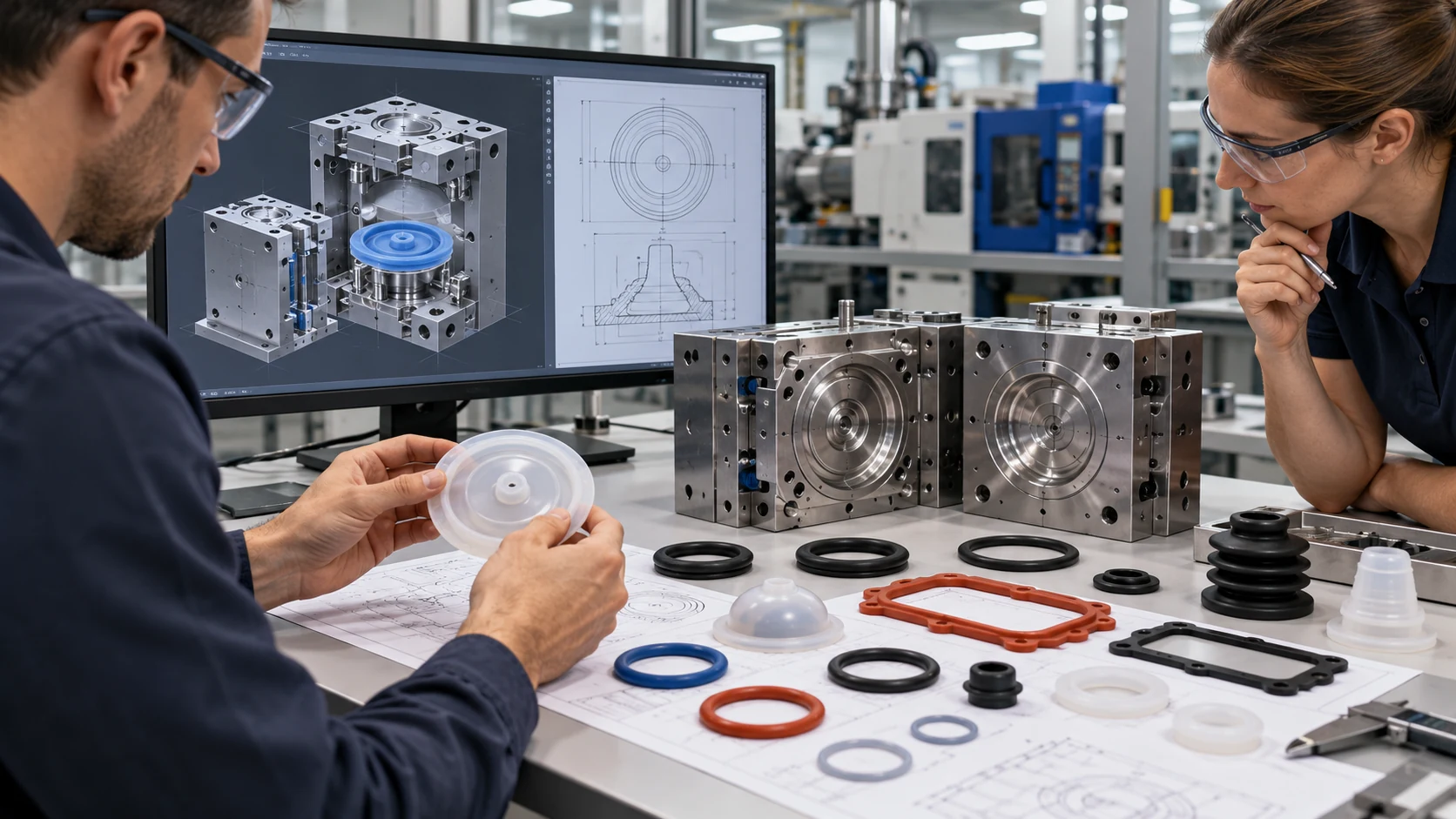
During DFM, important features include:
- Wall thickness
- Flow length
- Gate location
- Parting-line position
- Venting
- Flash-sensitive areas
- Undercuts
- Demolding requirements
- Critical dimensions
- Sealing surfaces
- Cavity count
Our
silicone mold design and tooling
process reviews these manufacturing factors before the mold is finalized.
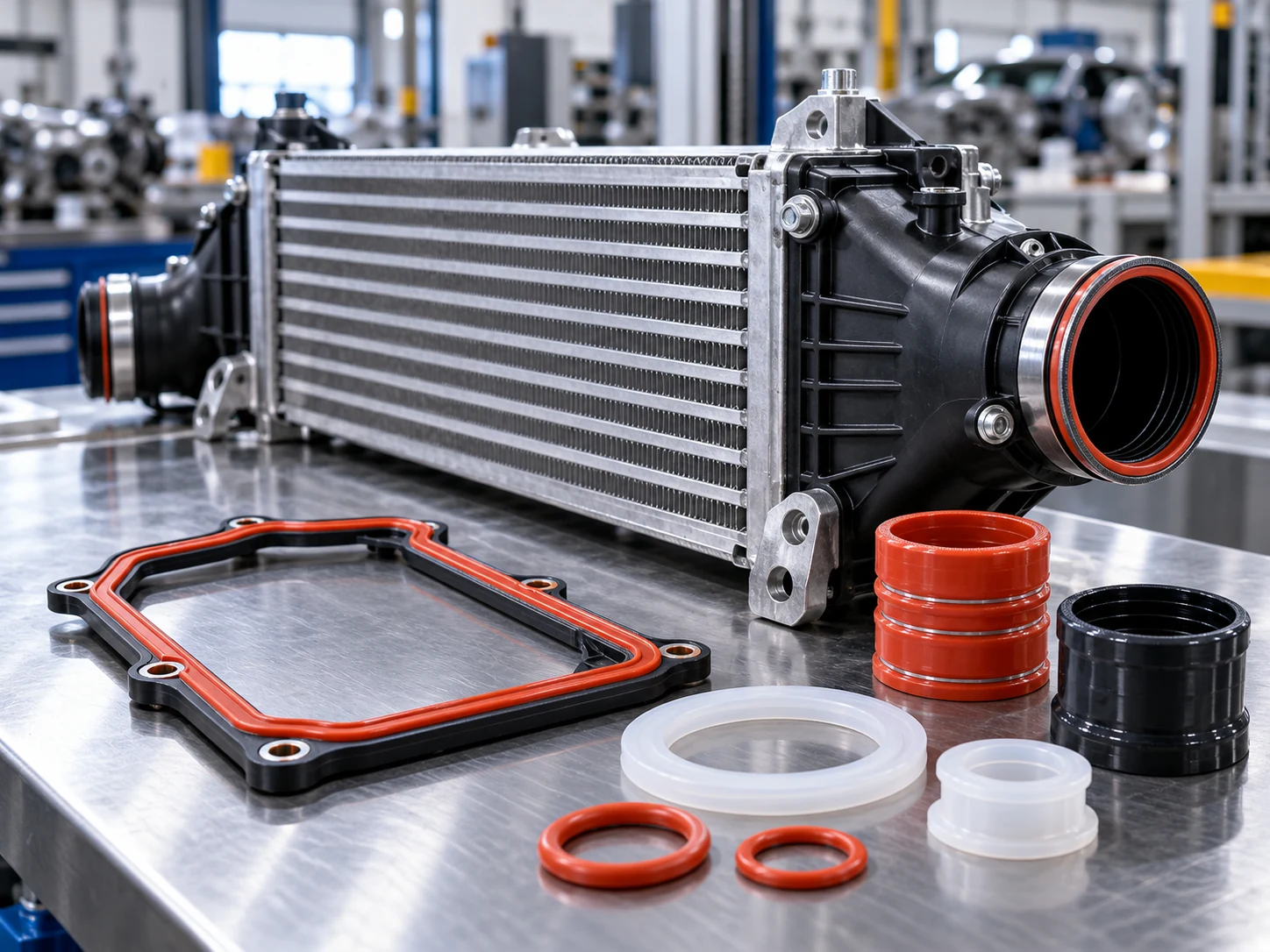
A Real Manufacturing Example: Automotive Charge-Air-Cooler Gaskets
Automotive charge-air-cooler gaskets provide a useful example of how material flow can influence manufacturing decisions.
These seals may have a relatively large overall perimeter while also containing thin cross-sections. This creates a long material flow path through the mold.
Industry literature has documented LSR use for this type of geometry because several process characteristics work together:
- Low viscosity supports rapid filling.
- Shear-thinning behavior assists flow through thin sections.
- Platinum curing supports controlled automated processing.
- Cold-runner concepts can reduce cured runner waste.
- Automation can reduce trimming and manual handling.
The lesson is not that all automotive gaskets should use LSR. Instead, it demonstrates how geometry and production strategy can change the economics of a process.
Tooling Differences Between LSR and HCR
LSR Tooling
LSR tooling is often designed around a cold-runner system. The objective is to keep silicone in the runner relatively cool while the material inside the heated cavity cures.
Direct gating and valve gates can minimize cured runner waste and reduce secondary trimming.
However, the combination of low viscosity and small molecule flow means LSR molds require excellent control at the parting line, shut-offs and venting surfaces.
HCR Tooling
Compression molds can be mechanically simpler when the geometry is suitable.
The material is placed into the mold as a controlled preform, and heat and pressure distribute the silicone throughout the cavity.
Transfer molding provides an intermediate approach. The compound is loaded into a separate pot and then pushed through runners into the mold cavities.
This can be useful for certain precision components or geometries where direct compression molding is less convenient.
LSR vs HCR for Seals, O-Rings and Gaskets
Both LSR and HCR can be suitable for sealing components.
Common examples include:
A large, relatively simple gasket may be suitable for HCR compression molding. A small precision seal with thin lips, complex features and high annual demand may favor LSR.
This is why the name of the finished part alone is not enough to determine the manufacturing process.
LSR vs HCR for Automotive Components
Silicone elastomers are used in many automotive applications because appropriate formulations can combine high-temperature resistance, flexibility and sealing performance.
Typical applications may include:
- Connector seals
- Ignition components
- Turbocharger-related seals and hoses
- Gaskets
- Bellows
- Vibration dampers
- Electrical sealing components
LSR can be especially attractive when the program requires high automation, multicavity tooling, complex geometry or integration with a rigid thermoplastic component.
HCR remains important for larger molded components, extruded silicone, hose applications and other projects where solid-silicone processing offers better flexibility.
LSR vs HCR for Medical and Food-Contact Components
Both liquid and solid silicone families include grades developed for food-contact, baby-care and medical applications.
The regulatory status, however, belongs to the specific compound and manufacturing system, not merely to the label LSR or HCR.
When evaluating a regulated component, manufacturers should review:
- The exact material grade
- Required regulatory standards
- Cure chemistry
- Post-curing requirements
- Pigments and additives
- Production cleanliness
- Traceability requirements
Material family alone should never be treated as evidence of regulatory compliance.
Material Properties: LSR and HCR Are Families, Not Single Materials
A common mistake is to assume that every LSR has one set of physical properties and every HCR has another.
In reality, both families contain many different formulations.
Manufacturers can select grades designed around characteristics such as:
- Hardness
- Tear strength
- Compression set
- Transparency
- High-temperature resistance
- Low-temperature flexibility
- Oil or fluid resistance
- Electrical properties
- Flame resistance
- Self-bonding behavior
- Surface friction
The LSR-versus-HCR decision is therefore primarily a combination of material form and manufacturing process. Final part properties must still be confirmed using the exact silicone compound.
When Should You Choose LSR?
LSR should be seriously considered when several of the following conditions apply:
- The component has thin or intricate features.
- There are long or difficult material flow paths.
- Annual volume supports dedicated injection tooling.
- A high level of process automation is valuable.
- Multicavity production is required.
- Dimensional repeatability is important.
- Secondary finishing should be minimized.
- Material waste needs to be reduced.
- Two-component molding or overmolding is planned.
- Automated inspection or robotic handling is required.
When Should You Choose HCR?
HCR may be more appropriate when:
- The geometry is well suited to compression or transfer molding.
- The project needs a flexible tooling strategy.
- The expected production volume does not justify complex LSR tooling.
- The silicone family may also be used for extrusion or calendering.
- The part is relatively large or straightforward.
- A specific solid-silicone formulation best matches the application.
- Existing HCR equipment can manufacture the part efficiently.
Is LSR Better Than HCR?
There is no universal winner.
LSR has strong advantages where low viscosity, precision injection molding and automation produce measurable manufacturing value.
HCR provides different advantages: processing flexibility, a broad selection of formulations and potentially simpler tooling for suitable components.
A well-designed HCR production process may outperform an unnecessarily sophisticated LSR solution.
At the same time, a difficult high-volume component may become significantly more economical when redesigned around LSR injection molding.
Questions to Ask Before Choosing LSR or HCR
- What silicone hardness is required?
- What operating-temperature range must the component withstand?
- Will it contact oil, fuel, chemicals or other media?
- Which dimensions and tolerances are critical?
- How thin are the smallest molded sections?
- How long are the main material flow paths?
- What annual production quantity is expected?
- How many mold cavities are economically justified?
- What level of automation is required?
- Is secondary trimming acceptable?
- Does the part need to bond to another substrate?
- Are regulatory approvals required?
- What tooling investment is practical?
- How long is the expected production program?
Engineering the Process Before Building the Mold
At Temco Rubber, we do not treat LSR or HCR as a default answer.
The manufacturing route begins with the component itself.
We review part geometry, sealing function, material requirements, expected quantity, tolerances and tooling strategy before recommending a production process.
Depending on the project, the final route may involve HCR compression molding, transfer molding, solid-silicone injection molding, LSR injection molding or another silicone manufacturing process.
This engineering-first approach helps reduce the risk of discovering process limitations after tooling has already been manufactured.
Explore our broader
custom silicone parts manufacturing
capabilities for information about DFM, mold development, material selection and repeat OEM production.
LSR vs HCR Silicone: Final Comparison
LSR and HCR are not simply competing materials. They are two different ways of bringing silicone-elastomer properties into a manufacturing system.
LSR offers low viscosity, controlled two-component metering, rapid platinum curing and strong automation potential. These characteristics make it especially valuable for complex geometry, precision molded components, multicavity production and high-volume repeat programs.
HCR offers a high-consistency material form, multiple curing options and broad processing flexibility through compression molding, transfer molding, injection molding, extrusion and calendering.
For an OEM project, the key question should therefore not be:
“Is LSR or HCR better?”
A better question is:
“Which material, mold and manufacturing process gives this specific component the best combination of performance, quality, repeatability and total production cost?”
Need Help Choosing Between LSR and HCR?
If you have a drawing, 3D model, existing part or application requirement, Temco Rubber can review the project before tooling begins.
We can evaluate part geometry, silicone grade, process suitability and tooling requirements to determine whether LSR injection molding, HCR compression molding or another manufacturing route is more appropriate.
Temco Rubber — Engineered Before Molded.
Technical References
- WACKER Chemie AG — Solid and Liquid Silicone Rubber: Material and Processing Guidelines, 6709en/10.25.
- Smithers Rapra — Silicone Elastomers 2012, 5th International Conference Proceedings, Berlin.
- DJ Silicone — Product Brochure 2025, silicone rubber grades and application data.